
OpenAI's Education for Countries initiative enters its next stage
OpenAI is expanding its Education for Countries initiative to help schools worldwide adopt AI through government partnerships, hands-on teacher training, and classroom-focused tools. The program emphasizes local adaptation, responsible AI use, and personalized student support, while open questions around cost, privacy, academic integrity, and measurable results remain key to its long-term success.
OpenAI is widening its Education for Countries initiative, aiming to help schools adopt artificial intelligence through new partnerships, hands-on teacher training, and purpose-built classroom tools. The effort reflects a broader push to make AI a practical part of everyday learning rather than a novelty, with a focus on improving educational outcomes across different regions and income levels.
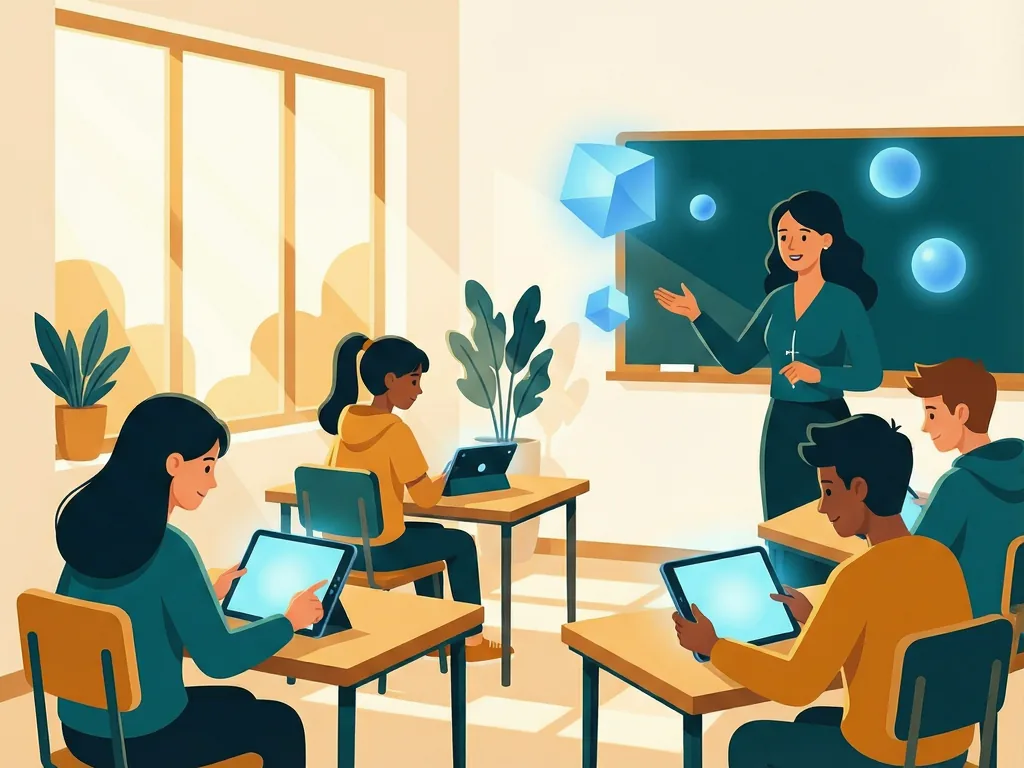
If you're a teacher, school administrator, or education policymaker wondering how AI might fit into your classrooms, this article breaks down what the program involves, what's being offered, and what questions still remain.
What the Education for Countries Program Actually Does
The initiative is designed around a simple idea: schools in different countries have very different needs, budgets, and levels of technical readiness. Rather than offering a one-size-fits-all product, OpenAI says it wants to work with governments, universities, and education organizations to shape AI adoption locally.
That means negotiating access to tools like ChatGPT for students and educators, but also pairing that access with support. The program emphasizes building infrastructure and know-how so schools can use AI responsibly, not just hand out logins and hope for the best.
The expanded push includes three main pillars:
- Partnerships with national and regional education bodies to roll out AI tools at scale
- Teacher training programs so educators understand both the possibilities and the limits of the technology
- Classroom-focused tools and resources designed to support learning rather than replace it
Teacher Training Takes Center Stage
One of the most consistent criticisms of AI in education is that teachers are often expected to adapt to new tools with little preparation. OpenAI's program appears to take that concern seriously by making professional development a core component rather than an afterthought.
Training covers practical questions educators actually face: How can AI help with lesson planning? When should students be allowed to use it? How do you spot the difference between AI-assisted learning and AI-assisted shortcuts? How do you protect student privacy?
This matters because the success of any classroom technology depends less on the software itself and more on whether the adults in the room feel confident using it. A tool that intimidates teachers rarely helps students.
What It Means for Students
For learners, the promise of the program is more personalized support. AI assistants can explain concepts in different ways, offer practice questions, and provide feedback outside classroom hours. In places where teacher shortages are severe, that kind of supplemental help could make a real difference.
OpenAI has framed the goal as improving learning outcomes globally, with particular attention to regions that have historically had less access to advanced educational technology. That said, outcomes will depend heavily on implementation. Access to a tool is not the same as measurable improvement, and any large-scale rollout will need careful evaluation over time.
Open Questions and Reasonable Caution
While the announcement is ambitious, a few things deserve a careful eye:
- Cost and sustainability. Large-scale AI access is not free long-term. Details about who pays and how, especially for under-resourced school systems, remain an important consideration.
- Privacy and data handling. Student data protection rules vary widely between countries, and schools will want clear answers before adoption.
- Academic integrity. Schools everywhere are still figuring out how to keep AI a learning aid rather than a shortcut around genuine understanding.
- Measurable results. The real test will be whether student learning actually improves, and that evidence will take time to build.
None of these concerns make the program a bad idea — they're simply the questions that determine whether it succeeds.
The Bigger Picture
OpenAI's move reflects a growing trend: AI companies are competing to become the standard tool in education, much as earlier tech companies did with laptops and learning software. For schools, this competition can be a good thing, bringing better offers and more tailored products.
For the initiative to have lasting value, the focus on teacher training and local partnerships will need to be more than messaging. If educators are genuinely supported and student outcomes are honestly measured, Education for Countries could become a meaningful model for AI adoption in public education.
Meta description: OpenAI is expanding its Education for Countries program with school partnerships, teacher training, and AI tools to improve global learning outcomes.
Tags: OpenAI, AI in education, teacher training, education technology, ChatGPT for schools
Featured image: Abstract friendly illustration of a globe surrounded by open books and soft glowing learning icons, warm pastel colors, no people or logos.
Comments (0)