
OpenAI set to buy Ona
OpenAI announced plans to acquire Ona, whose secure, persistent cloud environments will strengthen its Codex coding agent. The deal addresses a key limitation of agentic coding—ephemeral sessions that lose context—by enabling agents to maintain state across long-running tasks. It signals OpenAI's enterprise ambitions, emphasizing security and integration with real development pipelines, and reflects a broader industry shift toward infrastructure that lets AI agents perform sustained, useful work.

OpenAI has announced plans to acquire Ona, a move aimed at strengthening Codex with secure, persistent cloud environments. For developers and enterprise teams following the evolution of AI coding agents, this deal signals OpenAI's intent to support long-running agents that can work reliably inside real business workflows—not just in short, one-off sessions.

Why Ona matters to Codex
Codex is OpenAI's coding agent, designed to handle software engineering tasks on a developer's behalf. But agentic coding has a practical limitation: agents typically operate in temporary or ephemeral environments. When a session ends, the context, setup, and state can disappear, forcing the agent to rebuild its working conditions from scratch each time.
Ona's technology addresses this gap by providing secure, persistent cloud environments. In simple terms, these are workspaces in the cloud that stick around. An agent can set up a project, install dependencies, run tests, and return later with everything still in place. That continuity makes it far more practical for an AI agent to take on extended tasks that span hours or days rather than minutes.
What this means for enterprise workflows
The acquisition points clearly at OpenAI's enterprise ambitions. Businesses rarely need agents for quick demos; they need them for long-running processes such as maintaining codebases, migrating systems, running continuous integration tasks, or handling multi-step operational work across teams.

Persistent environments make those use cases feasible. With Ona's capabilities folded into Codex, enterprise customers could deploy agents that maintain state across sessions, integrate with existing development pipelines, and operate within the security boundaries that large organizations require. Security is emphasized in the announcement itself—a critical point for companies that must protect source code and sensitive data when allowing AI agents access to their infrastructure.
The broader race for agentic infrastructure
This deal fits into a wider industry trend. AI companies are no longer competing only on model quality; they are competing on the infrastructure that lets agents actually do useful work. Persistent compute, memory, and tool access are becoming just as important as raw model performance.
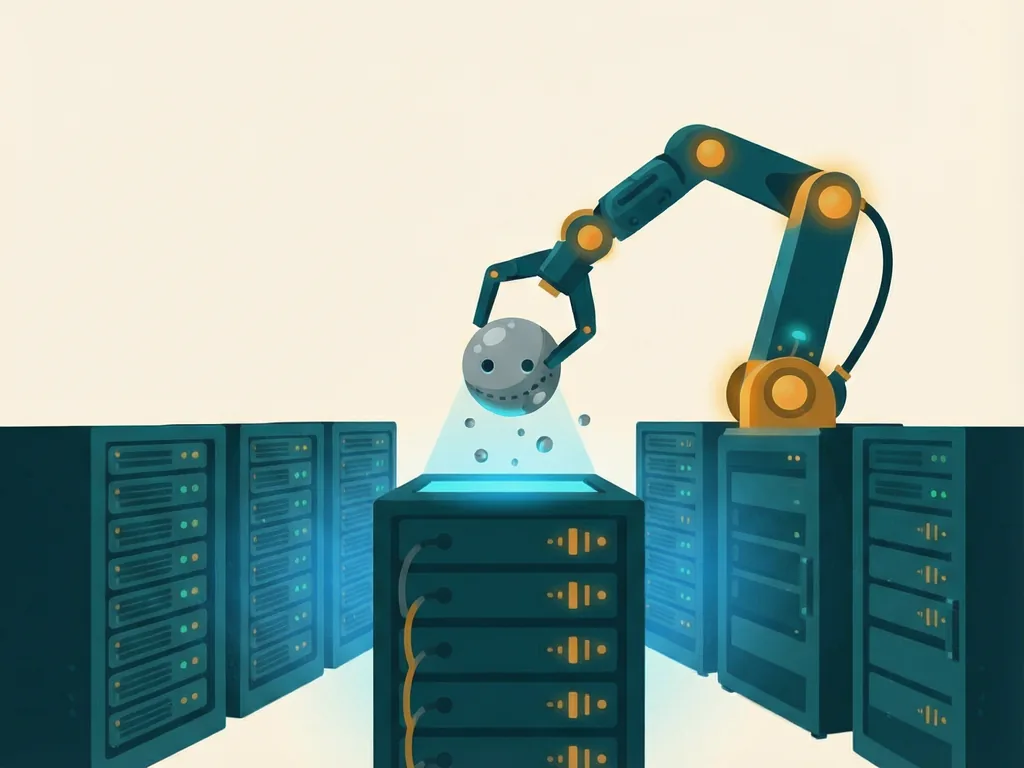
By bringing Ona in-house, OpenAI gains tighter control over how Codex runs its agents, rather than depending on third-party environments. That vertical integration could mean faster iteration, better reliability, and a smoother experience for teams running agents at scale.
What happens next
OpenAI has not laid out a detailed public timeline for integrating Ona's technology into Codex, so specific rollout dates remain unclear. What is clear is the direction: Codex is being positioned as a platform for sustained, enterprise-grade agentic work, and persistent cloud environments are the foundation that makes that positioning credible.
For developers, the practical takeaway is that AI coding agents are moving from short-lived assistants toward durable teammates that can pick up where they left off. For businesses evaluating AI tooling, this acquisition is a sign that the tools they need for long-running, security-conscious automation are maturing quickly.

Comments (0)