
Loopback Transformer Points Toward a Unified View of Residual Looped Transformers
Loopback Transformer stores residual updates as depth memory, lowering loss and improving accuracy at 1.4B and 3B while using fewer parameters.
Key Takeaways
- Loopback Transformer reframes residual connections in repeated Transformer blocks as a form of memory operating along network depth.
- It stores individual block updates, applies geometric forgetting to discount older passes, and learns content-dependent attention to retrieve useful earlier computations.
- At 1.4B and 3B parameters, Loopback achieves lower validation loss and higher mean accuracy across 13 zero-shot tasks than Standard Transformers under matched training tokens and executed depth.
- It retains only 68% and 75% of the Transformer parameters of Standard Transformers at 1.4B and 3B, respectively, showing improved parameter efficiency.
- Across smaller scales, Loopback outperforms Standard Transformers and seven looped residual baselines, highlighting residual design as an important path toward efficient repeated computation.
Meta description: Loopback Transformer reuses residual updates to beat Standard Transformers at 1.4B and 3B, with lower loss, higher accuracy, and fewer parameters.

Tags: Loopback Transformer, residual connections, parameter efficiency, zero-shot evaluation, Standard Transformers
Featured image: Abstract, friendly illustration of layered network blocks passing updates into a memory loop; no real people, no logos, no text.
A research paper introduces Loopback Transformer, a model that treats residual connections in repeated Transformer blocks as memory operating along network depth. At 1.4B and 3B parameters, the paper reports that Loopback achieved lower validation loss and higher mean accuracy across 13 zero-shot tasks than Standard Transformers, while retaining only 68% and 75% of their Transformer parameters, respectively.
A memory view for repeated Transformer blocks
Transformer models are built from blocks that can be run repeatedly. Residual connections let each block pass information forward by adding its update to the existing representation. The paper takes a recurrent-memory inspired view and reframes these connections as memory that operates along network depth.
This leads to a write–transport–read formulation. Instead of treating residual connections as fixed shortcuts, the paper compares different designs by asking three questions: what each design stores, how it carries information forward, and how later computation retrieves that information. In other words, residual connections are not only about keeping deep networks trainable; they also shape what the model remembers from one computation stage to the next.
How Loopback stores and reuses block updates
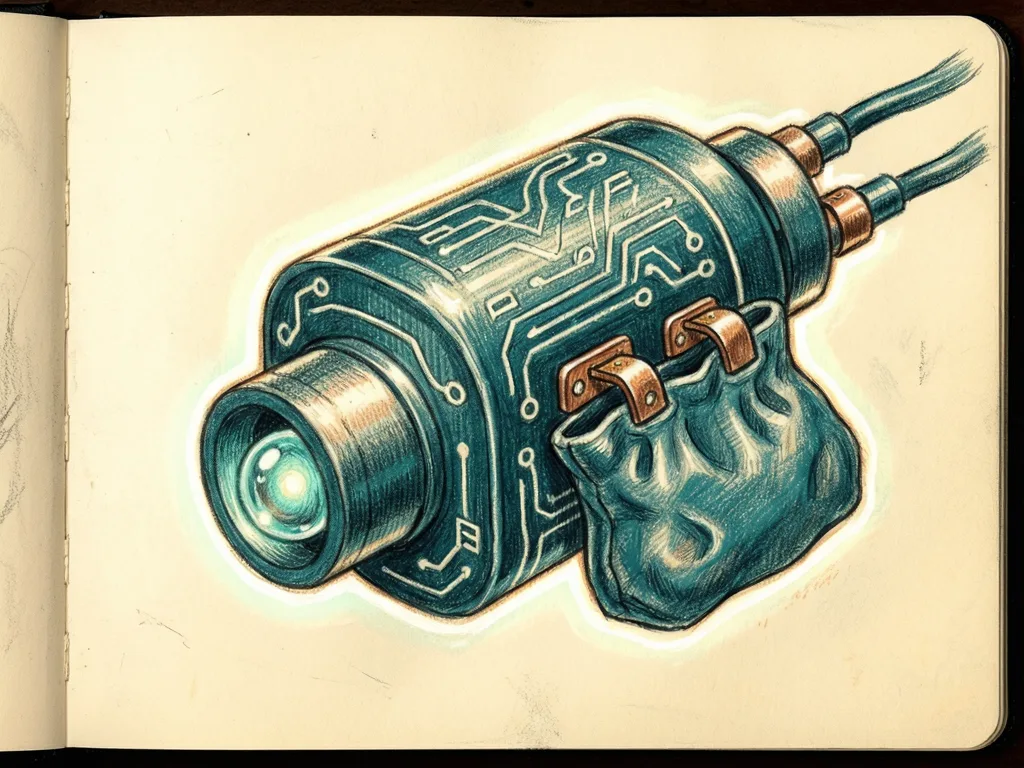
Guided by that view, the paper introduces Loopback Transformer. Its core idea is to store individual block updates instead of treating repeated blocks as a single unbroken computation. Loopback then uses geometric forgetting to progressively discount earlier passes, so older updates do not stay equally active forever. It also learns content-dependent attention over the stored updates, allowing the model to decide which earlier computations are useful for the current input.
The effect is retrieval inside the network’s depth. When a later block needs information that was produced earlier, Loopback can draw from stored updates rather than relying only on the current hidden state. This lets the model reuse useful information from earlier computation while still keeping the residual pathway as the backbone of the Transformer.
Results at 1.4B and 3B parameters
The paper evaluates Loopback against Standard Transformers at matched training tokens and executed depth. That comparison is important because it means the result is not simply attributed to seeing more training data or running more block passes. At both 1.4B and 3B parameters, Loopback achieved lower validation loss and higher mean accuracy across 13 zero-shot tasks.
Validation loss measures how well the model predicts held-out data, while mean accuracy summarizes performance across the 13 zero-shot tasks. Zero-shot tasks are evaluated without task-specific training examples, so they test how well the model transfers general capabilities.

At 3B, the paper reports that validation loss improves from 2.0005 to 1.9849. Mean accuracy rises from 48.56% to 49.45%, and Loopback scores higher on 11 of 13 tasks. It also retains only 75% of the Transformer parameters used by Standard Transformers at that scale. At 1.4B, Loopback likewise reports better loss and accuracy while retaining only 68% of the corresponding Transformer parameters.
Parameter counts exclude token embeddings and the output head, so the comparison focuses on the Transformer parameters rather than the full model weight count.
Smaller-scale comparisons and residual baselines
The paper also includes main comparisons at 191M, 374M, and 778M parameters. Across those scales, Loopback achieves the lowest validation loss and the highest thirteen-task mean among Standard Transformers and seven looped residual baselines.
This matters because parameter-efficient modeling is not only about shrinking layers or reducing weights. The paper argues that residual design is an important part of parameter-efficient modeling. Sharing computation works better when the model also learns how to retain and reuse its outputs. Loopback turns that idea into a concrete residual mechanism: store updates, discount old passes, and retrieve relevant ones when later blocks need them.
The authors present the result as a step toward making repeated Transformer computation more useful without increasing parameters proportionally. They also welcome feedback and discussion.




Comments (0)