
How loveholidays is turning everyone into a developer with Codex
This article explores how UK-based online travel agency loveholidays adopted OpenAI Codex, an AI coding agent, to make software development accessible beyond its engineering team. Engineers delegate routine tasks like bug fixes and refactoring, while non-engineers such as marketers and product managers build prototypes themselves. With human review always in the loop, loveholidays accelerates idea-to-product speed, empowers staff, and frees engineers for higher-value work, offering lessons for companies adopting AI coding tools.

Who this is for and what you'll get
If you're curious about how real companies put AI coding tools to work—beyond the hype and demo videos—this article is for you. We'll look at how the online travel agency loveholidays adopted OpenAI Codex, an AI coding agent, to make software development more accessible across its business and help teams turn ideas into working products faster. You'll learn what Codex is, how loveholidays rolled it out, what changed for its engineers and non-engineers, and what lessons other companies might take away from the experience.

What is OpenAI Codex?
OpenAI Codex is an AI coding agent built to work alongside developers rather than just autocomplete their typing. Unlike a simple code-completion assistant, Codex can take on whole tasks: you describe what you want in plain language, and it can write code, fix bugs, run tests, and even open pull requests for you to review. It's available through ChatGPT, a CLI tool, and IDE integrations, and it works in the cloud on tasks you assign to it, so it can keep working in the background while your team focuses on other things.
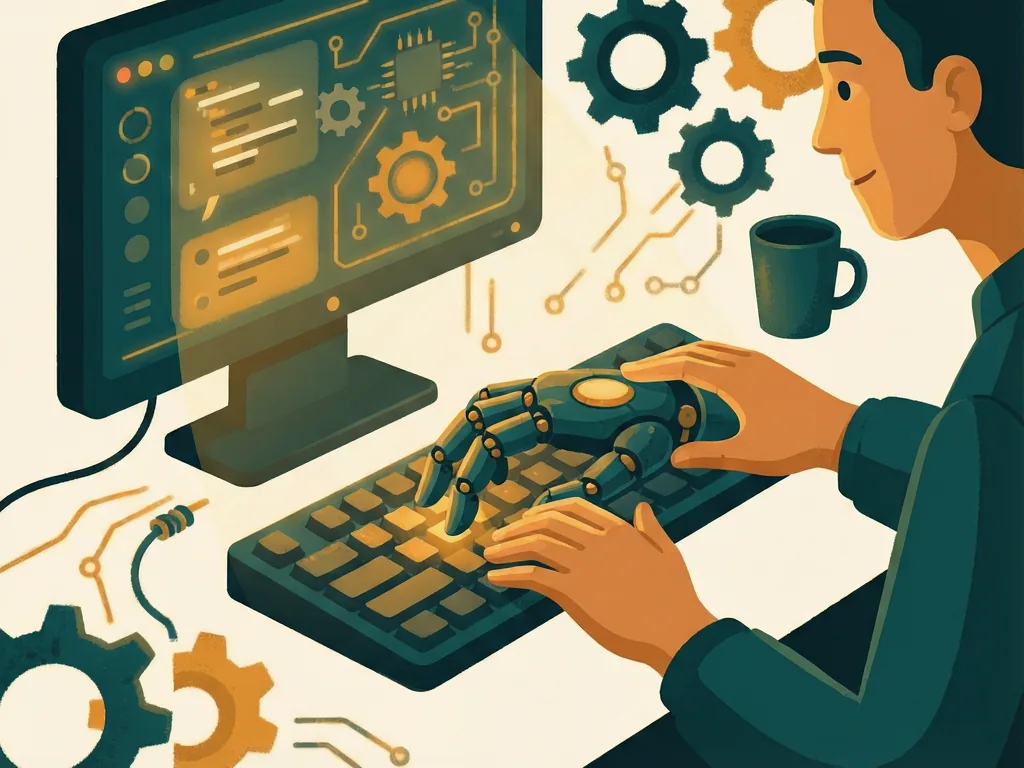
The key shift is that Codex behaves more like a junior colleague you can delegate work to, rather than a fancy keyboard shortcut. That distinction matters a lot for companies like loveholidays, where the goal isn't just to make existing engineers faster—it's to let people who don't write code professionally participate in building software.
Why loveholidays turned to Codex
loveholidays is a UK-based online travel agency, and like many fast-growing digital businesses, it has far more ideas than engineering capacity. Product managers, marketers, analysts, and operations staff constantly spot opportunities: a better internal tool, a quick data check, a small feature tweak. Traditionally, every one of those ideas had to queue up for the engineering team's attention.
By adopting Codex, loveholidays aimed to lower that bottleneck. The company's approach treats AI not as a replacement for its engineers but as a way to widen who can contribute to software. When a marketer can prototype a small tool themselves, or a product manager can spin up a working demo before writing a spec, the engineering team is freed up to focus on harder, more valuable problems.

This fits a broader pattern in the industry: companies are moving from "AI assists developers" to "AI makes development a shared capability across the whole business." loveholidays is one of the more visible examples of a company leaning into that shift.
How the rollout works in practice
loveholidays has shared that its teams use Codex to handle routine coding tasks and to support colleagues outside the engineering organization. The practical pattern looks something like this:
- Engineers delegate standard work. Bug fixes, test writing, refactoring, and other well-defined tasks get handed to Codex, which drafts the changes as a pull request for a human engineer to review and merge.
- Non-engineers build small tools. Staff who understand a problem deeply but don't code professionally can describe what they need and use Codex to generate a working prototype, shrinking the distance between idea and product.
- Engineers stay in the loop. Nothing ships without human review. Codex accelerates the work; it doesn't replace the judgment of the people who understand the codebase and the business.
That human-in-the-loop setup is important. AI-generated code still needs careful checking for correctness, security, and fit with existing systems. Companies seeing the best results from tools like Codex tend to invest in clear review processes rather than treating the AI's output as done.
What results and lessons stand out
The headline benefit loveholidays points to is speed: ideas move to working software faster because fewer steps sit between "someone has an idea" and "something exists to try." A secondary benefit is morale and empowerment—people across the business feel ownership over the tools they use day to day, instead of filing tickets and waiting.
A few lessons seem transferable to other organizations:
- Accessibility is the real unlock. The biggest gains come not from making great engineers marginally faster, but from letting more people participate in building.
- Review discipline still matters. Delegating code to an AI works only if humans still review, test, and own what gets merged.
- Start with well-scoped tasks. Bug fixes, internal tools, and small features are natural first wins; large architectural work still needs experienced engineers at the helm.
It's worth noting that, as with most early enterprise AI adoption stories, the long-term effects—on code quality, team structure, and hiring—are still unfolding. loveholidays' experience so far is encouraging, but companies considering a similar move should treat it as an evolving practice, not a finished playbook.
The takeaway
loveholidays' use of OpenAI Codex shows what happens when a company stops thinking of software development as a specialist silo and starts treating it as a shared capability. By pairing an AI coding agent with sensible human oversight, the travel company is helping teams across the business turn ideas into products faster—while its engineers keep their focus on the work that needs them most. For other organizations watching from the sidelines, the message is clear: the tools are ready, the workflow is proven by early adopters, and the main prerequisite is a culture willing to let more people build.

Comments (0)