
Beginners can learn vector databases by studying embeddings, similarity search, and ChromaDB.
The freeCodeCamp course teaches vector databases using embeddings, similarity, Gemini, ChromaDB, semantic search, and a practical project.
Key Points
- freeCodeCamp and codeEdx offer a beginner-friendly 1.5-hour course that teaches vector databases, embeddings, similarity search, and ChromaDB from fundamentals to a semantic search project.
- Vector databases store information as embeddings so systems can match meaning rather than exact keywords, making them useful for RAG apps, recommendations, and AI agents.
- The course explains core concepts such as tokenization, embedding models, cosine similarity, and Euclidean distance, including the classic king-man+woman=queen example.
- It shows how Gemini embeddings, PCA visualization, and ChromaDB work together, and explains how indexing methods reduce slow brute-force search as data grows.
- The course provides a practical path from concept to implementation, helping developers and newcomers understand embeddings, similarity metrics, and approximate nearest-neighbor search step by step.
Meta description: freeCodeCamp.org published a 1.5-hour codeEdx course on vector databases, embeddings, Gemini, ChromaDB, and semantic search on the YouTube channel.

Tags: vector databases, embeddings, ChromaDB, Gemini, freeCodeCamp
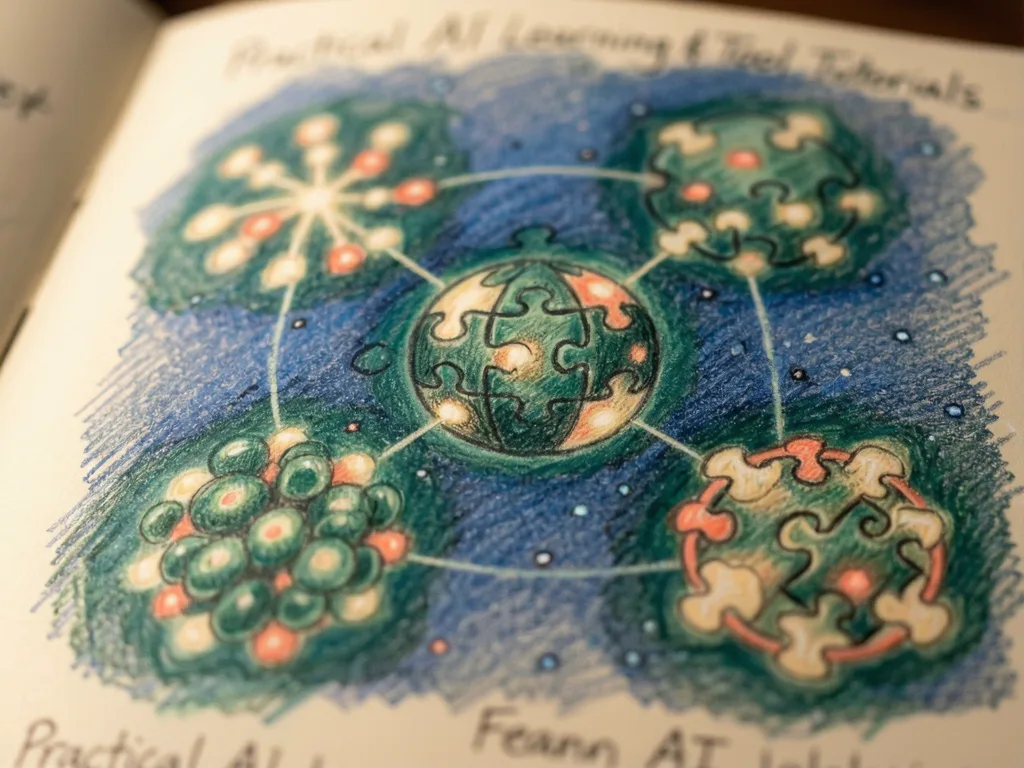
Featured image: Abstract friendly illustration of numeric vectors linking documents to similar results, with no text, logos, or people.
freeCodeCamp.org has published a comprehensive 1.5-hour course that teaches vector databases from first principles to a usable semantic search project. It is aimed at beginners, programmers, and AI application builders who want to understand how systems retrieve information by meaning rather than by exact keyword matches. The course comes from codeEdx. Its instructor has 15 years of software engineering experience and has served as a lead AI engineer for the last four years. The course does not require prior knowledge.
Why vector databases matter
In a vector database, information is stored as numbered lists, or embeddings, so the system can compare meaning rather than exact words. That approach makes vector databases useful in recommendation systems, retrieval-augmented generation apps, and AI agents, where relevant content may be phrased differently from a user's question.

For readers, the practical value is simple: instead of requiring an exact term match, semantic search can connect a query to material with a similar underlying meaning. The course turns that concept into a guided build, starting with the math behind vector comparisons and ending with a project that searches by meaning.
What learners cover first
The course defines vectors and shows how cosine similarity and Euclidean distance estimate the closeness of two data points. Cosine similarity looks at the angle between vectors, while Euclidean distance measures the straight-line gap between them.
It then moves to tokens and tokenization. AI models cannot read raw text directly, so a tokenizer splits text into smaller units. The lesson uses the word "indivisible" to show that one word can be represented by more than one token, helping beginners see why text must be converted into machine-friendly pieces.
Next, it explains embeddings and embedding models. It shows how text is transformed into numeric vectors that represent meaning, and uses the classic king minus man plus woman equals queen example to illustrate word relationships.
How Gemini, indexes, and ChromaDB fit together
A live demo uses Google's Gemini embedding model to create vectors from text. The results are then visualized in three dimensions with principal component analysis, or PCA, making it easier to see how similar items cluster together in vector space.
The course also breaks a vector database into storage, indexing, and query-processing layers. It shows how inverted-file indexes and hierarchical-navigable-small-world indexes reduce reliance on slow brute force search. Brute force search checks every item, which becomes costly as data grows, while these index types narrow the search space.
The practical build uses ChromaDB: the learner sets up a Chroma client, creates a collection, saves the generated embeddings, and submits meaning-based queries.
What readers can take away
The 1.5-hour format is short enough for an initial overview, but the course gives readers a concrete path from concept to implementation. It may help developers building search, recommendation, or agent features, and it may also reassure newcomers that terms such as embeddings, tokenization, similarity metrics, and approximate nearest-neighbor search are learnable step by step.
Viewers can watch the complete course on the freeCodeCamp.org YouTube channel; the runtime is 1.5 hours.




Comments (0)