
Election details and protective measures for 2026
This article outlines OpenAI's five main commitments to protect the 2026 US elections: directing voters to authoritative voting information, strengthening cyber defenses against attacks on election infrastructure, promoting transparency through watermarking and provenance tools for AI-generated content, enforcing policies against political misuse and impersonation, and monitoring bias. It explains how the company balances AI benefits with safeguards to keep its tools from being exploited during election season.

Election seasons bring a wave of questions about how artificial intelligence fits into democratic processes. If you're curious about what OpenAI is actually doing to keep its tools from being misused during the 2026 elections, this article walks you through the company's main commitments. We'll cover five areas: providing reliable voting information, strengthening cyber defense, being transparent about AI in political content, guarding against misuse, and monitoring bias. No technical background needed—just an interest in how AI and democracy intersect.

Reliable Information for Voters
The first pillar focuses on making sure people who ask AI chatbots about voting get accurate, useful answers. When millions of users turn to tools like ChatGPT with questions about how to register, where to vote, or what's on their ballot, the responses need to point them toward trustworthy sources.
OpenAI's approach here involves directing election-related queries to authoritative, official sources rather than relying solely on the model's own generated answers. The idea is simple: for high-stakes civic questions, users should land on information from election officials and established authorities, not a chatbot's paraphrase that could be outdated or slightly off. This kind of routing matters because even small errors—a wrong registration deadline, an incorrect polling location—could meaningfully affect someone's ability to participate in an election.
Strengthening Cyber Defense
Elections don't just happen at polling stations; they depend heavily on digital infrastructure. Campaign organizations, election offices, and civic groups all face cybersecurity threats, and AI tools can be a double-edged sword in this space—useful for defenders, but potentially helpful to attackers too.
OpenAI's work in this area centers on making sure its models aren't used to support malicious cyber operations, especially those targeting election infrastructure. That includes monitoring for abuse and enforcing policies that prohibit using AI tools to develop or execute attacks. For defenders, the company also explores how its technology can help security teams identify and respond to threats more effectively. The goal is to tip the balance in favor of the people protecting election systems rather than those trying to undermine them.

Transparency About AI-Generated Content
One of the biggest concerns around AI and elections is the possibility that generated images, audio, or text could be passed off as authentic—think fabricated photos of candidates or synthetic audio clips designed to deceive voters.
To address this, OpenAI has focused on transparency measures. These include work on provenance tools, such as watermarking or metadata approaches, that make it easier to tell whether a piece of content was created by AI. The broader aim is to support an ecosystem where voters, journalists, and platforms can verify what they're looking at before sharing it. Transparency doesn't solve the problem on its own, but it gives fact-checkers and newsrooms practical tools to work with when suspicious content starts circulating.
Guarding Against Misuse
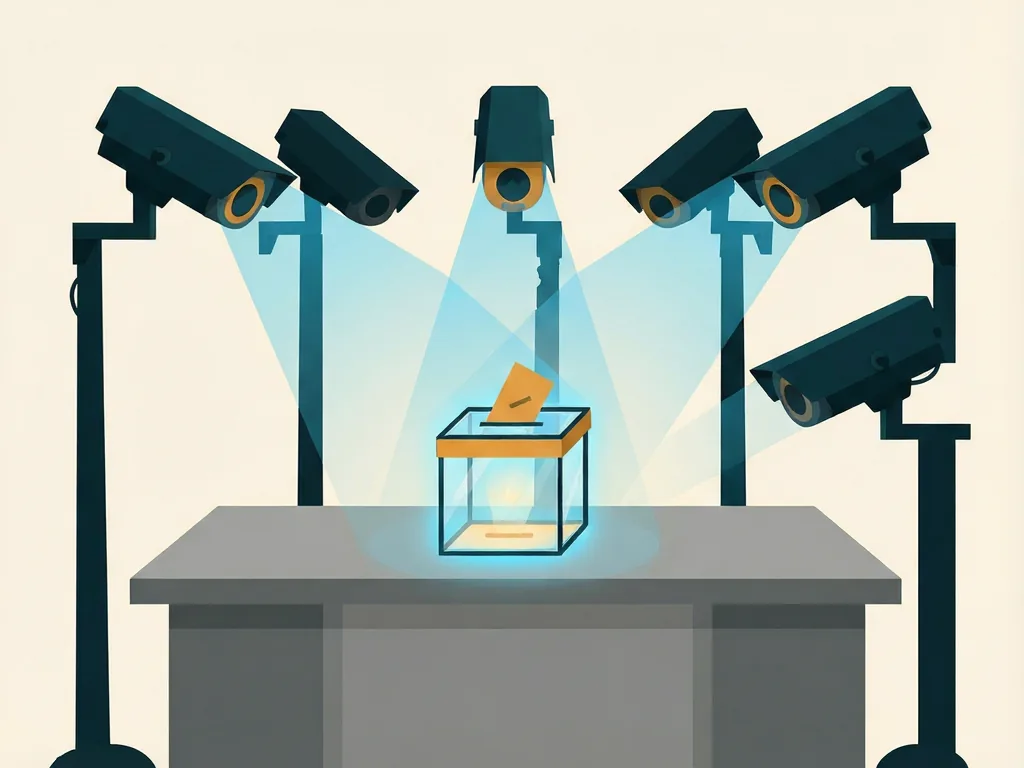
Beyond cyber threats, there's a wider category of misuse to worry about: coordinated influence operations, impersonation of candidates or officials, and attempts to suppress votes through deception.
OpenAI's usage policies explicitly prohibit using its tools for political campaigning, impersonation, and attempts to influence elections deceptively. During election periods, the company increases monitoring and enforcement to catch violations. This involves reviewing how its products are being used and taking action when patterns suggest abuse—whether that's an account generating misleading content at scale or attempts to build applications that automate deceptive outreach. It's an ongoing effort, since bad actors adapt their tactics and platforms have to adapt alongside them.
Monitoring Bias
Finally, there's the question of fairness. If an AI model handles political topics, does it lean one way or another? Users reasonably expect that asking a chatbot about candidates or policy debates won't come with a hidden slant.
OpenAI states that it works to reduce bias in how its models handle politically sensitive topics, aiming for balanced and even-handed responses. This is genuinely difficult—defining "balanced" is itself a contested question—but the commitment involves testing model behavior on political topics and refining outputs to avoid favoring particular parties, candidates, or ideological positions. For voters, the practical takeaway is that election-related questions should ideally get factual, neutral treatment rather than editorializing.
What This All Means for Voters
Taken together, these five commitments paint a picture of a company trying to get ahead of election-related risks rather than reacting to scandals after the fact. Reliable information routing protects voters from bad answers. Cyber measures protect the infrastructure. Transparency tools help everyone spot synthetic content. Usage policies deter bad actors, and bias monitoring aims to keep the AI itself from becoming a source of skewed information.
It's worth keeping in mind that no set of safeguards is perfect. AI systems and the people who misuse them are both evolving quickly, and promises made before an election are best judged by what happens during one. Still, for anyone trying to understand the current landscape, these five areas are the right framework—and watching how they hold up through 2026 will be informative for elections well beyond this cycle. If you want to stay informed, following updates directly from OpenAI and official election authorities is the most reliable way to track both the technology and the voting information itself.
Comments (0)