
The agent harness is self-evolving.
A framework explains how AI agents evolve via harness changes while base models stay fixed, covering evaluation, theory, applications, and governance.

Key Takeaways
- The article presents a unified framework for self-evolving AI agents that improve by updating their “harness” — instructions, memory, tools, and runtime logic — while keeping the base model fixed.
- It distinguishes self-evolution methods by what they modify: interpreted components such as prompts and workflows versus executable components such as tools and runtime logic, noting that these carry different risks.
- It introduces a four-part evaluation framework — selection, activation, attribution, and improvement — to help verify whether reported performance gains reflect genuine, transferable learning.
- It connects the framework to practical applications across personal assistance, enterprise automation, scientific discovery, robotics, and public services, while emphasizing governance, accountability, privacy, and security concerns.
- It outlines future priorities in update algorithms, supporting infrastructure, evaluation, and responsible deployment, arguing that improvement claims require scrutiny before being accepted as real.
Self-Evolving AI Agents: A New Framework for Systems That Learn From Experience

A unified framework for understanding how AI agents improve themselves around a fixed base model has been developed, offering researchers and engineers a structured way to think about self-evolution. The work, posted on GitHub at https://github.com/zgcagi/Harness-RSI, examines how execution feedback produces lasting changes to the "harness" — the instructions, memory, tools, and runtime logic that surround a base model. The article is aimed at AI researchers, agent developers, and anyone building systems that are expected to get better over time without retraining the underlying model.
Why harness evolution matters
Building agents that learn from experience is a central goal of artificial intelligence. One practical path toward that goal is to let the system around a fixed base model adapt over time. This approach keeps the base model unchanged while the harness — everything wrapped around it — evolves.
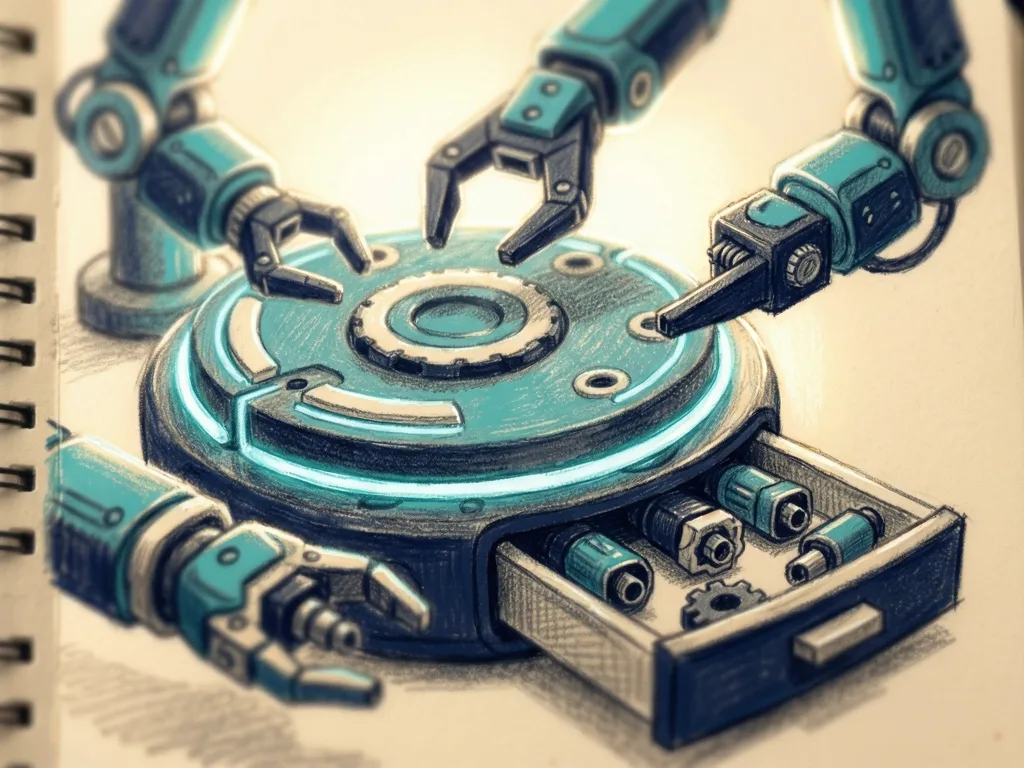
The framework organizes self-evolution algorithms by what they actually update. Some algorithms target instructions, memory, or workflow specifications that are interpreted by fixed components. Others target executable tools and runtime logic. The distinction matters because these two families propose and admit changes in different ways, and they carry different risks.

Four questions behind every reported gain
A key contribution of the article is its evaluation framework. When a self-evolving system reports an improvement, the authors argue, four separate claims are often bundled together:
- Selection: Is the estimate independent of the search process, or does it account for selection effects?
- Activation: Did the accepted update actually operate in the runs that were scored?
- Attribution: Did the update cause the difference under controlled evaluation conditions?
- Improvement: Does the difference hold beyond the specific tasks that produced it?
The reviewed protocols show why held-out performance, component use, and retained gains each require different kinds of evidence. In other words, a system that scores higher after self-evolution may not have genuinely learned something transferable — the gain could come from selection, from an update that never activated, or from overfitting to the tasks that drove the change.
Theory borrowed from evolutionary algorithms and PAC learning
The theoretical analysis treats harness evolution within the framework of evolutionary algorithms. It also draws on PAC learning theory for continual learning to generate insights into algorithm design. This combination gives developers a way to reason about how changes are proposed, tested, and retained over time, rather than relying purely on trial and error.
Where these systems are being applied
The article covers applications across several domains: personal assistance, enterprise automation, scientific discovery, robotics, and public services. Each domain brings different constraints. A personal assistant may need to adapt to a user's habits, while a scientific discovery agent may need to update its workflow as new evidence emerges. Enterprise automation and public services raise additional questions about reliability and accountability.
Broader effects on work, markets, and governance
Beyond technical design, the article discusses potential effects on productivity and skills, economic distribution and market structure, innovation and public services, privacy and security, and institutional governance. These are not side issues. If agents can persistently change their own instructions, memory, or tools, then questions about who controls those changes, who audits them, and who is responsible when something goes wrong become central rather than optional.
What comes next
Drawing on these analyses, the authors identify future directions in four areas: update algorithms, supporting infrastructure, evaluation, and responsible deployment. For readers building or evaluating self-evolving agents, the practical takeaway is that improvement claims deserve scrutiny on all four fronts — selection, activation, attribution, and improvement — before they are treated as real.




Comments (0)