
Scale Agentic Coding Workflows Using Meta’s Muse Spark Open on NVIDIA GB300 NVLink 72 Hardware
Meta 发布 Muse Spark Open,一个 816B 参数的 MoE 模型,拥有 42B 活跃参数和 1M token 上下文,专为代理编程工作流设计。它在 NVIDIA GB300 NVL72 上训练和优化,支持多步任务执行、工具调用、子代理协调和原生多模态感知。稀疏 MoE 路由每次激活 42B 参数,在 Blackwell Ultra 上实现每 GPU 50K tokens/s 和每用户 600 tokens/s。
Key Takeaways
- Meta released Muse Spark Open, an 816B-parameter MoE model with 42B active parameters and a 1M-token context window, trained on NVIDIA GB300 NVL72 for agentic coding workflows.
- It is designed for long, multi-step coding tasks such as planning, tool use, self-correction, repository-scale codebase understanding, and subagent coordination.
- The 1M-token window can hold an entire project, while native multimodal perception processes text, images, video frames, and audio in a single pass.
- Sparse MoE routing and GB300 NVL72 optimization deliver high throughput, and NVFP4 checkpoints reduce memory footprint and cost while supporting larger KV caches for long-context sessions.
- NVIDIA supports deployment and fine-tuning through stacks like SGLang, vLLM, TensorRT LLM, Dynamo, and NeMo AutoModel, with weights available on Hugging Face and a NIM container for production.
Meta has released Muse Spark Open, an 816-billion-parameter mixture-of-experts (MoE) model with 42 billion active parameters and a 1 million token context window, trained on NVIDIA GB300 NVL72 Blackwell Ultra hardware specifically for agentic coding workflows. The model is aimed at developers and AI teams who need an assistant that can plan and carry out long, multi-step coding tasks rather than just autocomplete a single function.

Why general coding models fall short
Most coding models today are optimized for single-shot completions: generating a function, writing a unit test, or suggesting an inline fix. They work well when the context is small and the answer is immediate. Agentic coding is a different problem. Planning a multifile refactor, navigating thousands of files, recovering from failing tests, and coordinating subagents over long horizons requires a model built for sustained, multistep work.
Muse Spark Open is designed for exactly those workloads. According to Meta, it delivers higher first-attempt accuracy, reliable tool calling, and deep codebase understanding across repositories. It plans, acts, observes, and self-corrects, supporting multistep task execution with tool use, output evaluation, and iterative refinement. Goal conditioning keeps the model on direction, while context compaction retains the knowledge needed to sustain progress across long-running sessions.
A 1M token window that fits a whole project
The headline number is the 1M token context window. In practice, that means the model can hold an entire project, including complex dependencies, legacy code, and thousands of files, without breaking a task into pieces. For developers juggling large or messy codebases, that removes a common source of errors: losing track of context between chunks.
Beyond coding, Muse Spark Open can search the web, including multimodal browsing, spawn and coordinate subagents for decomposable tasks, and use computer capabilities unified across desktop, mobile, and browser. It generates separate commentary before each action, so developers can see what the agent is doing and why.
Multimodal perception in a single pass
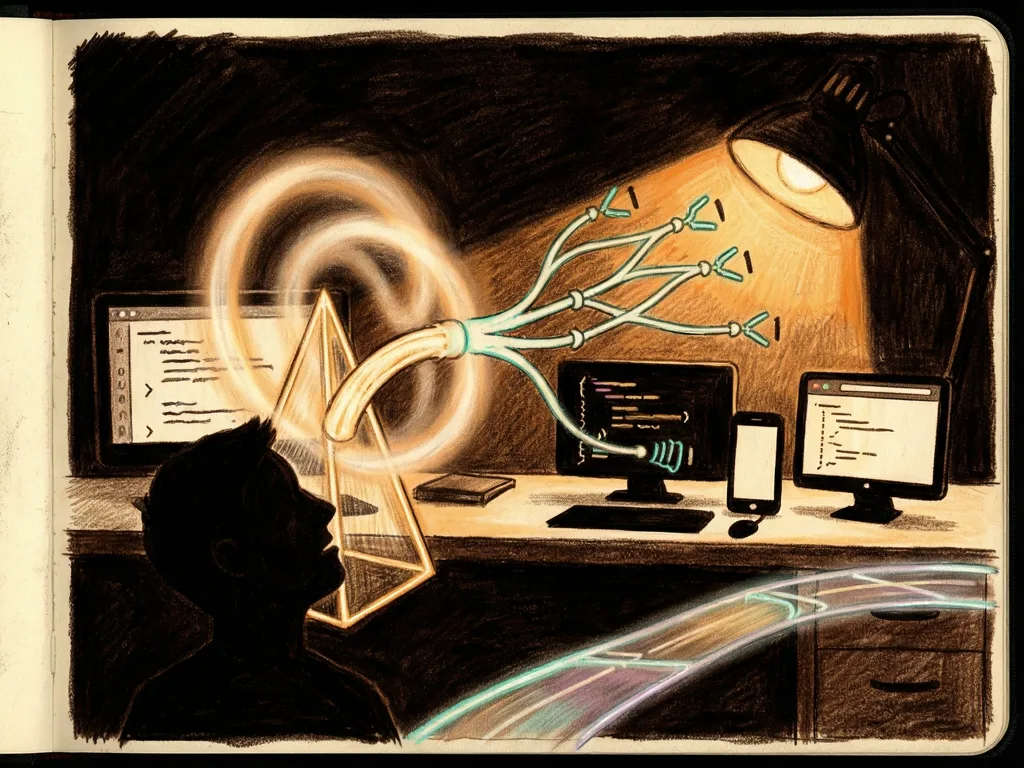
The model's 1.8B perception encoder natively processes interleaved text, images, video frames, and audio without separate pipelines per modality. That means it reasons over what it sees, hears, and reads in one unified pass. Meta positions this as a fit for developer workflows that span screenshots, diagrams, error logs, and video walkthroughs inside the same agent session. A demonstration video shows Muse Spark Open diagnosing a bug from a screen recording with narrated audio, reading the codebase to identify the root cause.
Under the hood, sparse MoE routing activates only 42B of the 816B total parameters per token, using top-8 routing across 256 experts. Meta says this delivers frontier agentic capability at a fraction of the serving cost of dense models at equivalent scale.
Optimized for NVIDIA GB300 NVL72
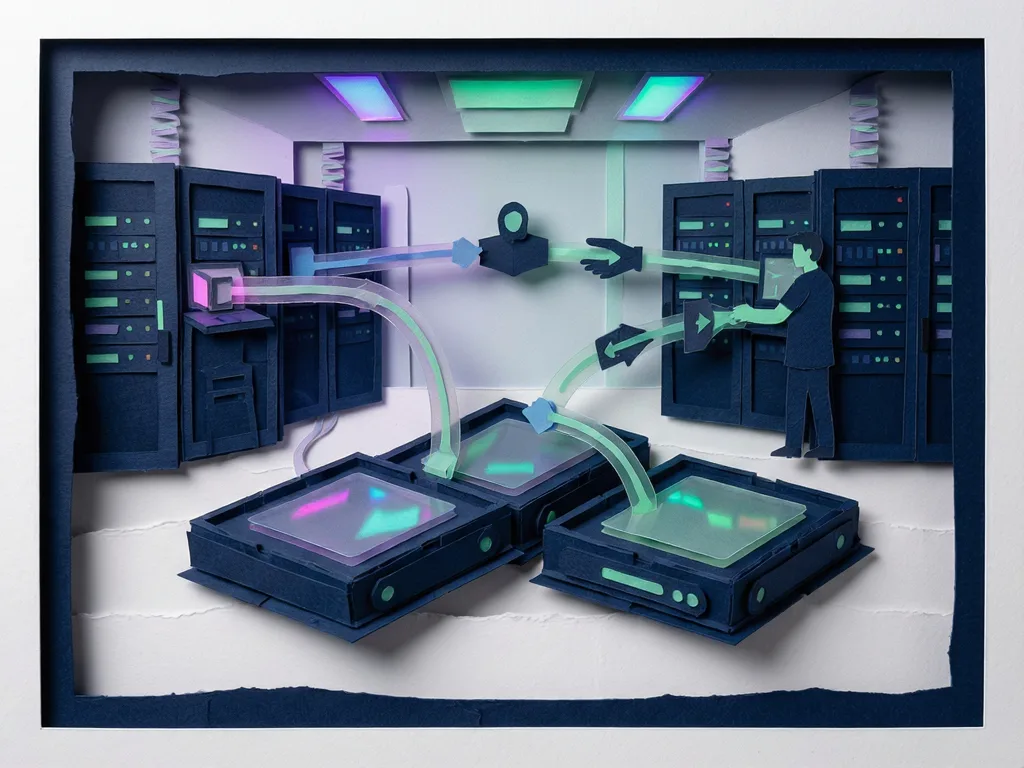
The NVIDIA GB300 NVL72 integrates 72 NVIDIA Blackwell Ultra GPUs into a single rack-scale platform. Its 72-GPU NVIDIA NVLink domain enables communication at 130 TB/s, which matters for a sparse MoE model like Muse Spark Open: each token is routed to eight of 256 experts, and that bandwidth directly determines how much of the theoretical throughput a deployment actually realizes.
Out of the box, Meta says Muse Spark Open running agentic workloads on NVIDIA GB300 NVL72 delivers up to 50K tokens per second per GPU and up to 600 tokens per second per user. On four NVIDIA Blackwell GPUs with speculative decode, the model achieved over 50K tokens per second per GPU and over 600 tokens per user.
Meta also generated NVFP4 checkpoints optimized for NVIDIA Blackwell Ultra. These shrink the memory footprint of all 816B parameters with native FP4 Tensor Core acceleration, move fewer bytes per token to increase tokens per second per user, and free up memory for a larger KV cache to support concurrent long-context sessions, delivering higher throughput and a lower cost per token.

Deployment and fine-tuning options
NVIDIA supports multiple inference stacks for the model. SGLang, vLLM, and TensorRT LLM give developers direct control over serving configuration, parallelism, and batching on NVIDIA accelerated computing. TensorRT LLM adds compiled engines tuned for NVIDIA GPUs. NVIDIA Dynamo publishes deployment recipes for all three stacks and separates prefill from decode across dedicated GPU pools, so compute-bound prompt processing doesn't slow token generation. Its KV cache-aware routing sends each request to the worker already holding the relevant prefix, avoiding precomputation as context accumulates across long agentic sessions.
For teams that want to adapt the model, NVIDIA NeMo AutoModel is a PyTorch-native training library with native Hugging Face checkpoint support and no model conversion required. It enables full SFT and LoRA fine-tuning out of the box, optimized for rapid experimentation across industry-specific cases. NVIDIA Megatron Bridge can convert Hugging Face checkpoints to Megatron format when teams are ready for large production-scale training.
To get started, developers can download Muse Spark Open NVFP4 weights from Hugging Face. For production deployments, NVIDIA offers a downloadable NIM that reduces setup to a single command, replacing benchmarking and tuning cycles with a container that automatically selects the best serving backend and precision for the detected hardware.
What to watch
The model's combination of a 1M token context window, native multimodal perception, and MoE efficiency puts it in direct competition with other large agentic coding models, though Meta has not published head-to-head benchmark comparisons against specific rivals. The practical questions for developers are how reliably the model handles real repositories over long sessions and how the NVFP4 checkpoints perform outside NVIDIA Blackwell Ultra hardware. Meta and NVIDIA have positioned the release as production-ready, but independent testing will determine whether the throughput and accuracy claims hold up across different workloads.




Comments (0)