
Build Scalable AI Automations Using n8n
n8n guide teaches production-ready AI automation: self-hosting, webhooks, API pagination, data cleaning, LLM routing, agents, and memory.
Key Takeaways
- The course positions n8n as a production-grade AI automation and orchestration layer, not just a simple app-to-app integration tool.
- It emphasizes reliability fundamentals such as self-hosting, webhook handling, API pagination, authentication, and data cleaning before AI workflows can work at scale.
- It teaches LLM routing, dynamic prompts, decision branching, and persistent memory to build more useful and context-aware AI workflows.
- It introduces autonomous agents and multi-agent systems, showing how specialized agents can cooperate across research, drafting, SEO, and other business tasks.
- The main value is making AI automation operational: consistent execution, state preservation, tool integration, and reduced need for constant human supervision.
Meta description: freeCodeCamp's 1-hour n8n AI automation course teaches self-hosted workflows, LLM routing, agents, memory, multi-agent systems, and production reliability.

Tags: n8n, AI automation, freeCodeCamp, production workflows, autonomous agents

freeCodeCamp.org has published a new 1-hour n8n AI automation course on its YouTube channel, aimed at builders who need more than a quick two-app connection. The course frames n8n not as a simple drag-and-drop integrator, but as a backend orchestration layer that can receive events, transform data, call large language models (LLMs), store state, and run multi-step business processes. For readers evaluating whether AI automation can support real operations, the course is useful because it focuses on the parts that usually break in production: webhook handling, API pagination, authentication, messy payloads, decision routing, and persistent memory.
The source material makes a clear distinction between hobby workflows and company-ready workflows. Many public tutorials stop after connecting one app to another. The new freeCodeCamp guide goes further by teaching self-hosted infrastructure, workflow canvas navigation, webhook management, and deployment concepts. That is the right starting point for automation engineers, operations leads, and developers who need to run n8n under their own control rather than depend on a hosted service.
Why This Course Moves Past Simple App Connections
Automation projects often look impressive in a demo because the happy path is easy: a form submission arrives, an email is sent, and a row is added to a spreadsheet. Real systems are noisier. Inputs can be malformed, APIs may return paginated results, credentials expire, rate limits appear, and unstructured documents require extraction before any useful decision can be made. The course addresses those failure modes directly.

It covers the HTTP Request node as a central tool for calling external APIs, including pagination and authentication. It also introduces custom JavaScript code nodes to clean messy payloads. That matters because many AI workflows fail before the model is even involved; they fail because the data reaching the prompt is incomplete, duplicated, or shaped incorrectly. A workflow that can normalize input is more likely to survive changes in upstream systems.
From Self-Hosted Setup to Clean Data Handling
The course begins with core architecture and setup, teaching the fundamentals of n8n, how to navigate the workflow canvas, manage webhooks, and deploy on self-hosted infrastructure. Self-hosting is a practical choice when teams need control over data location, execution limits, network access, and cost structure. It also puts the builder in charge of updates, backups, and monitoring, which are not optional concerns once a workflow touches customer data or internal systems.
The data transformation section is where the course becomes more technical. REST APIs and data cleaning are not glamorous topics, but they are the foundation of reliable AI automation. By using HTTP requests and JavaScript code nodes, builders can turn raw webhook events or API responses into structured fields that downstream nodes can understand. This is especially important when feeding documents or emails into an LLM, because structured context usually produces more consistent outputs than raw text dumps.
Adding LLM Routing, Agents, and Memory
The intelligent AI workflow portion teaches end-to-end pipelines that extract structured data from unstructured documents, connect dynamic prompts directly to LLMs, and route decisions automatically. This is a step beyond basic prompt templates. Dynamic prompts let a workflow insert relevant variables, such as customer status, product details, or extracted document fields, into an LLM call. Decision routing then sends the result to different paths based on content, confidence, or business rules.
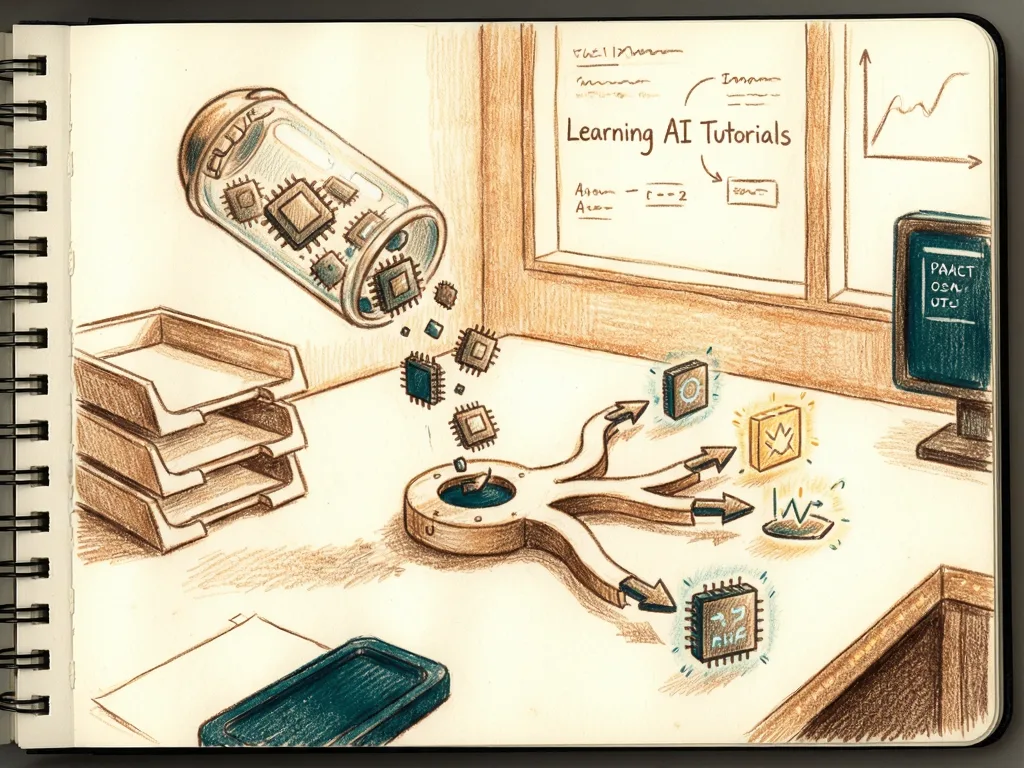
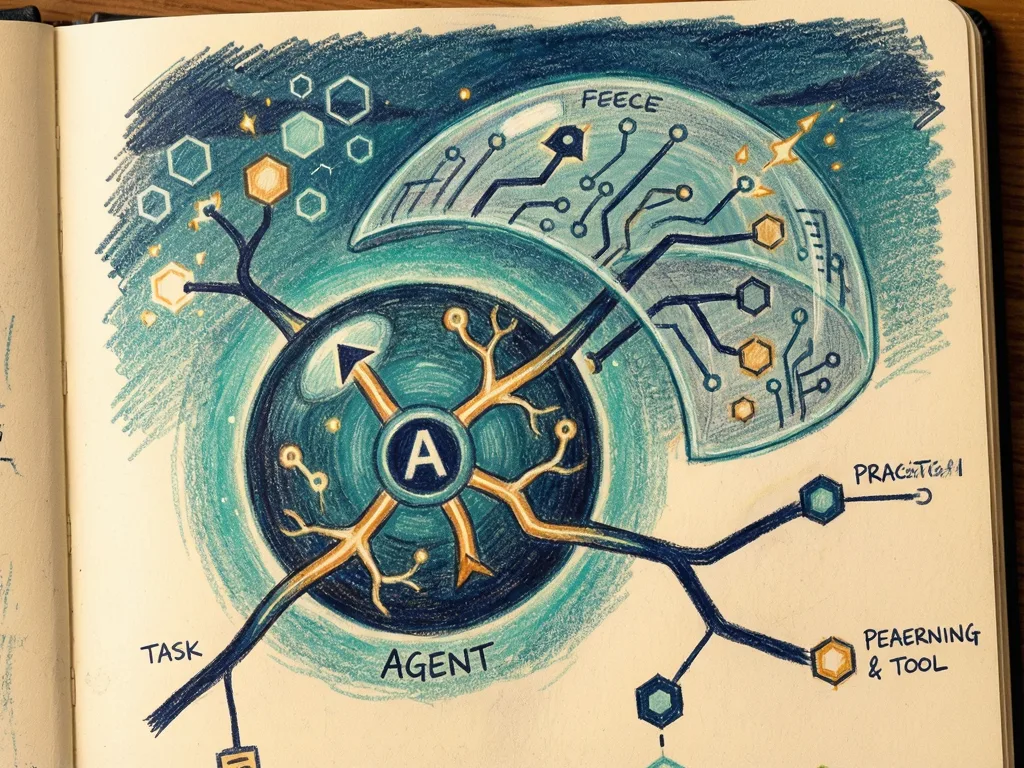
The course also distinguishes basic models from autonomous agents. An agent is not just an LLM answering a question; it is a model that can use tools, choose steps, and interact with external systems. The guide shows how to implement tools, connect Google Sheets as a lightweight knowledge base, and build persistent long-term memory that survives system restarts. Memory is the detail that makes agent workflows feel practical rather than toy-like, because many real tasks require context across repeated runs.
Multi-Agent Workflows and Production Readiness
Multi-agent systems are presented as chains of specialized agents, from research and outline creation to drafting and SEO packaging. This approach can be more reliable than asking one agent to handle an entire project. Each agent has a narrower role, a clearer prompt, and a smaller error surface. If one step fails, the workflow can retry that step without restarting the whole chain.
The course's emphasis on reliability is its most useful signal for production-minded readers. Webhooks, API pagination, authentication, JavaScript cleanup, LLM routing, agents, memory, and multi-agent handoffs are not isolated features. They are parts of a system that must run repeatedly without constant human babysitting. For companies, the value is not merely that AI can generate text, but that automation can make consistent decisions, preserve state, and integrate with existing tools.
Who Should Use It / Who Should Skip It
This 1-hour freeCodeCamp n8n AI automation course is best for people who already understand basic automation concepts and want to move into self-hosted, API-heavy, AI-driven workflows. It is also suitable for technical marketers, developers, and operations staff who need to evaluate n8n as an orchestration layer for internal processes. Readers who want only a quick two-app integration may find the course more detailed than they need.
Those building customer-facing automation, document processing pipelines, or multi-step research workflows will get the most value from the material. It is not a substitute for security review, data governance, or production monitoring, but it gives a clearer picture of what is required before an AI automation moves from a demo into dependable use.


Comments (0)