
Python-Based Learning Roadmap for LLM Application Development
A Python roadmap for LLM apps: call APIs, craft prompts, add RAG, build agents, and use MCP while managing reliability, security, and cost.

Key Takeaways
- The guide gives Python developers a practical roadmap for LLM apps: call model APIs, craft prompts, add RAG, build agents, and connect external context/tools via MCP.
- Building LLM-powered software is mainly an engineering integration job, not training a model or writing one perfect prompt.
- Production reliability depends on layers beyond the model call, including data access, tool safety, latency, cost control, and answer correctness.
- RAG helps ground answers in private or current information, while agents enable multi-step workflows but require strict permissions, approvals, logging, and limits.
- MCP is an emerging integration option whose fit depends on adoption and compatibility with existing APIs, security, and team workflows.
Meta description: A guide shows Python developers how to build LLM-powered apps by calling model APIs, crafting prompts, adding RAG, creating agents, and connecting via MCP.
Tags: python, llm-apps, rag, ai-agents, mcp
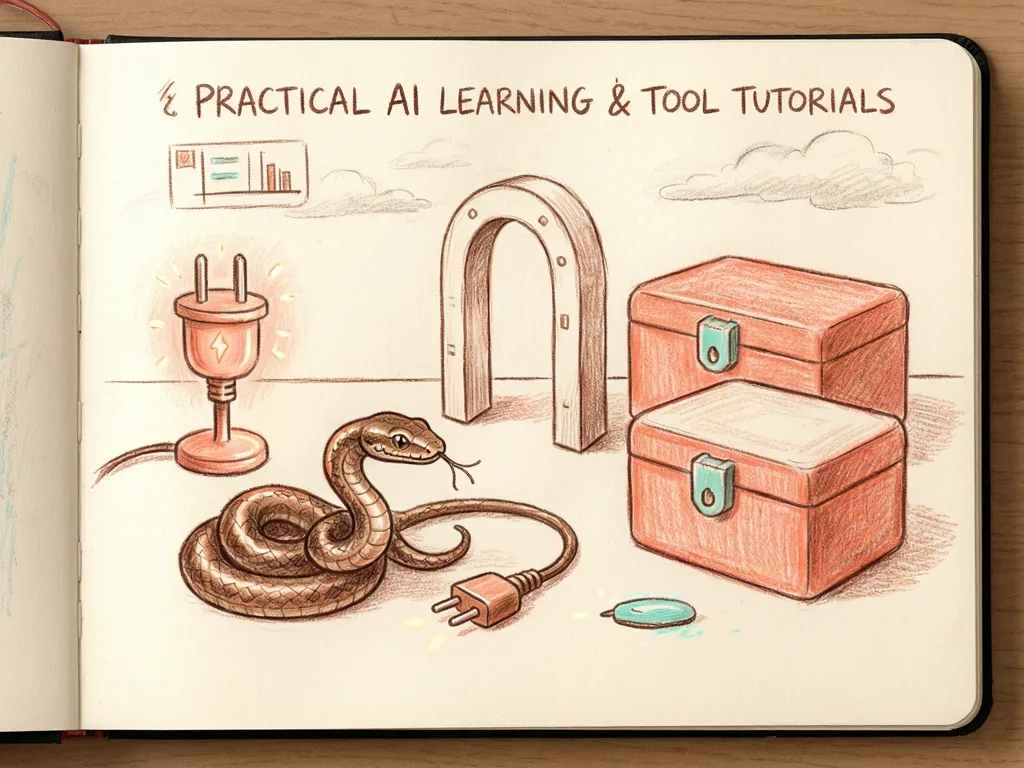
Featured image: Abstract friendly illustration of code blocks, model endpoints, a retrieval index, agent tools, and protocol links; no real people, no logos, no text.
What the guide says
A Python-focused guide, presented without a stated publication date, tells developers how to build LLM-powered applications in Python by calling model APIs, crafting prompts, adding retrieval-augmented generation, creating AI agents, and connecting via MCP. The source does not name a model vendor, list prices, or cite benchmark scores, so the main takeaway is the workflow itself rather than a performance claim.
For developers, the message is practical: the work of adding AI to software is less about training a large model and more about wiring existing model services into an application. Python remains a common language for that wiring because it supports web apps, scripts, data pipelines, and many machine-learning tools.
The core path from prompt to product
The first step is calling model APIs. A model API is a service endpoint that accepts text, code, or structured requests and returns a language-model response. In a Python application, this usually means sending a request, handling the reply, and adding error handling for timeouts, rate limits, or unexpected output.
The second step is crafting prompts. A prompt is the instruction and context given to the model. Clear prompts can reduce vague answers, but they are not a guarantee. The guide places prompt work alongside retrieval and agent design, suggesting that a reliable product needs more than one carefully written instruction.
Retrieval, agents, and MCP
The next layer is retrieval-augmented generation, often shortened to RAG. RAG retrieves relevant documents or database records, then passes selected context to the model before it answers. This can make responses more grounded in private or current information, though it also creates work around indexing, access control, freshness, and citation quality.
The guide also points to AI agents. An AI agent is a software system that uses a model to choose steps, call tools, and keep track of tasks. Agents can automate multi-step workflows, but they also raise operational questions: what tools may run, how actions are approved, how failures are logged, and how costs are capped.
Finally, the material mentions connecting via MCP. MCP, or Model Context Protocol, is an emerging way to link models with external context and tools. Its value depends on adoption by tool builders and application teams, so developers should watch how well it fits with their existing APIs, permissions, and security model.

Why this matters for Python teams
For Python teams, the incremental value is a checklist for production features. The source frames the path as calling APIs, writing prompts, adding RAG, building agents, and using MCP. That sequence moves an application from a basic chat interface to a system that can use private data, take actions, and integrate with other services.
It also signals where risk sits. The model call is only one part. The harder problems are usually around data access, tool safety, latency, cost control, and whether the answer is correct for the user’s context. Teams should test these layers before exposing them to customers.
The original material also includes a Python Tricks promotion, describing a newsletter that delivers a short & sweet Python trick to an inbox every couple of days and inviting readers to learn more and see examples.
What to watch next
The next question is how quickly these patterns become standard. RAG and agents are already common in developer discussions, but MCP integration is still something teams may need to evaluate case by case. A practical path is to start with a narrow API call, add retrieval only when the answer needs private or current context, and add agents only when the task requires tool use with clear limits.
For developers, the bigger takeaway is that building LLM-powered applications in Python is an engineering job, not only a prompt-writing job. The guide’s value is in naming the parts: model APIs, prompts, retrieval-augmented generation, AI agents, and MCP. Each part needs its own tests, security review, and user-facing behavior.
Comments (0)