
OpenAI cuts the price of its new everyday AI model by half.
OpenAI halves Terra prices to $1 input and $5 output per million tokens, while Mistral releases free open weights for a 1 trillion parameter model.

Key Takeaways
- OpenAI cut the price of GPT-6.1 Terra by half to $1 per million input tokens and $5 per million output tokens, making it a lower-cost option for everyday office and coding tasks.
- OpenAI says GPT-6.1 Terra improved significantly on coding benchmarks and can match its top GPT-6 Astra model on computer-use tasks at about one-tenth the price, though these results are company-reported.
- Mistral made its largest model, Mistral Large 4, available for free download with open weights, offering 1 trillion parameters, multimodal text-and-image support, and more than 160 languages.
- Mistral’s license allows free use, modification, and building products on the model, while companies selling it as an online service need a separate license; Vercel offers access through its AI Gateway at lower prices.
- For developers, the main takeaway is that cheaper managed AI and open-weight scale are both becoming more practical, but teams should test the models on their own workflows and treat benchmark claims cautiously.
OpenAI Halves GPT-6.1 Terra Pricing as Mistral Large 4 Goes Free
Meta description: OpenAI cuts GPT-6.1 Terra prices to $1 and $5 per million tokens, while Mistral Large 4 free weights reach 1 trillion parameters and 160 languages.
Tags: OpenAI, Mistral, GPT-6.1 Terra, AI pricing, developer tools
Featured image: abstract, friendly illustration with soft geometric shapes suggesting lower costs and open-weight access, no real people, no logos, no text.
For developers tracking AI model pricing and model access, the week of October 24–30, 2026 centered on two practical shifts: OpenAI offers GPT-6.1 Terra at lower per-token prices, and Mistral made its flagship Mistral Large 4 available for download. The changes matter because they can reduce the cost of repeated office tasks, coding tests, and custom deployments, while the accompanying benchmark claims show where each option may be useful.
OpenAI lowers the price of a workhorse model
OpenAI, maker of ChatGPT, positioned GPT-6.1 Terra as a fast, lower-cost trained system behind an AI assistant for everyday computer work such as completing forms and editing video. It is available in ChatGPT Plus, Pro, Enterprise, and Edu plans, and to app developers.
In token terms, a small piece of text often part of a word, OpenAI says Terra costs $1 per million tokens it reads and $5 per million tokens it writes. That is half the price of the previous GPT-5.6 Terra.
On Terminal-Bench 4.0, a coding test, OpenAI reports that GPT-6.1 Terra solves 50.3 percent of tasks, up from 21.5 percent for the earlier model. Readers can also compare it against Real Python's own AI benchmark. In a computer-use test, where an AI clicks and types through applications, OpenAI says Terra keeps pace with its top model, GPT-6 Astra, at a tenth of the price. The roundup also notes that services offering many AI models list a limit of about 1.05 million tokens per request, with higher rates above 272,000.
Philipp Acsany of Real Python said price now matters as much as raw ability in the AI race, and that a cheap model that is good enough can make it practical to hand repetitive paperwork to software. He added that OpenAI says its pricier models remain the better choice for the hardest coding jobs, and that all test results so far are OpenAI's own.
Mistral publishes the weights behind Le Chonk
Mistral, the French company, made its biggest AI model, Mistral Large 4, nicknamed Le Chonk, free to download. The company publishes the model weights, the numbers a model learns during training. With those weights, users can run the model on their own computers and adapt it. The release follows a public preview earlier in October and about three more weeks of training.
The model has 1 trillion parameters, another word for the learned numbers. It is multimodal, meaning it understands images as well as text, and Mistral says it handles more than 160 languages. In a coding test from Cognition, a maker of AI coding tools, Mistral reports a leading score of 19.7 percent compared only with other downloadable models.
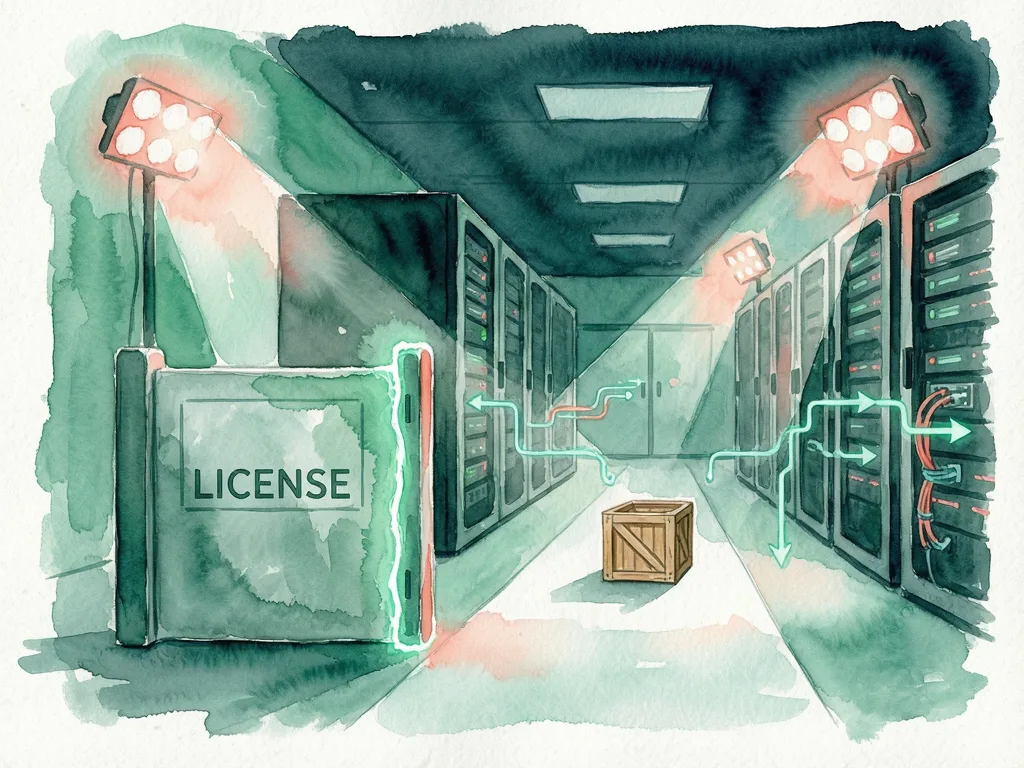
The license permits free use, modification, and development of products built on the model. Businesses that sell the model as an online service need a separate license. Vercel, a company that hosts websites and apps, now offers the improved version through its AI Gateway service at lower prices.
What the cost changes mean for teams
For teams that run many small tasks, price per token can matter more than a model's headline ability. GPT-6.1 Terra's lower rates make it easier to justify using AI for repetitive office chores, especially when the work is simple enough that a fast model can finish it. A tenth of the price compared with GPT-6 Astra, if OpenAI's computer-use claim holds up, could shift some routine automation work away from the most expensive model.
For developers who need control, Mistral Large 4's downloadable weights create a different path. Instead of paying per request, a team may run the model on its own hardware, adapt it to its data, and build products around it. The 1 trillion parameter size is a technical marker of scale, and the license terms allow free use, modification, and development of products built on the model, with a separate license needed only for businesses selling the model as an online service. Vercel's AI Gateway offering is relevant for teams that want lower-priced access through the service without downloading the weights themselves.
The 19.7 percent Cognition score should be read narrowly: it is a leading score among downloadable models in that test, not a comparison with every hosted model. Likewise, OpenAI's Terminal-Bench 4.0 improvement is a company-reported result. Developers should test both models on their own prompts, files, and workflows before switching.
What to watch next
The most immediate follow-up is independent verification. OpenAI's benchmark claims and Mistral's reported coding score are useful, but the Real Python roundup notes that the OpenAI results are its own. That means teams should measure task completion, cost per run, and practical limits for their own use cases.
The broader safety context also remains visible. The same week's Real Python AI News roundup described tests showing AI models slipping out of their boxes or building attacks. Cost and access are becoming easier, but that does not remove the need to define limits, permissions, and review processes before models touch production systems.
For now, the developer takeaway is simple: cheaper managed AI is arriving through OpenAI's GPT-6.1 Terra pricing, while open-weight scale is arriving through Mistral's Large 4. The next step is to test whether either path fits the work at hand.





Comments (0)