
October marks a pivotal turning point for vibe game development.
Simon Willison says Claude Opus 5.5 can design fun vibe-coded browser games, lowering barriers and sparking AI asset debates.
Key Points
- Simon Willison reports that Claude Opus 5.5 has crossed a threshold: it can now design browser games that are genuinely fun to play, not just games that look playable.
- The breakthrough came from a simple prompt—“Make it a LOT more fun”—suggesting the model has developed a meaningful grasp of game design, including gameplay loops, challenge, and learning curves.
- Four vibe-coded projects show a range of outcomes, from a single-prompt mini-game to a polished multiplayer RTS, while also revealing uneven quality across models and projects.
- The development dramatically lowers the barrier to creating interactive entertainment, but intensifies debates about AI-generated assets and the need for human creative judgment, playtesting, and iteration.
In October 2026, developer and writer Simon Willison reported that AI models—specifically Claude Opus 5.5—have crossed a new threshold: they can now design games that are genuinely fun to play, not just games that look like games. Willison, who previously documented the November 2025 inflection point for coding agents with Opus 4.5 and GPT-5.1, says he has vibe-coded four browser-based games in recent weeks that he actually enjoyed playing, built entirely in HTML and JavaScript with no manual code review. He presented the findings on 28th October 2026, citing improvements in 3D modeling, music generation, and—most critically—game design.
The claim matters beyond one developer's hobby. If models can now handle the design of a compelling gameplay loop—the part Willison himself says he did not think AI could do—then the barrier to creating interactive entertainment drops dramatically for anyone who can write a prompt. It also intensifies an already heated debate about AI-generated assets in games, a controversy that has grown as tools like Midjourney have spread through the industry. Willison acknowledges that vibe-coded games combine AI-generated art, music, writing, and code all at once, and he expects the games community to split over whether that is acceptable.
The breakthrough: asking for "fun" and getting it
Willison's turning point was simple. After earlier experiments produced games that looked functional but were not enjoyable, he told Claude Opus 5.5 to "Make it a LOT more fun." According to his account, it did. That result led him to conclude that Opus 5.5 has a meaningful grasp of game design, a discipline he describes as a deep craft requiring novel gameplay loops, appropriate challenge, and a satisfying learning curve.
His impression is that GPT-6 Astra can absolutely build a game but does not yet match Opus 5.5's sense of fun, though he expects OpenAI to close the gap by the end of the year. He also ran the same initial prompt sequence through ChatGPT GPT-6 Pro for a fantasy village project; the output looked great, he said, but did not play nearly as well.
Four games, four lessons
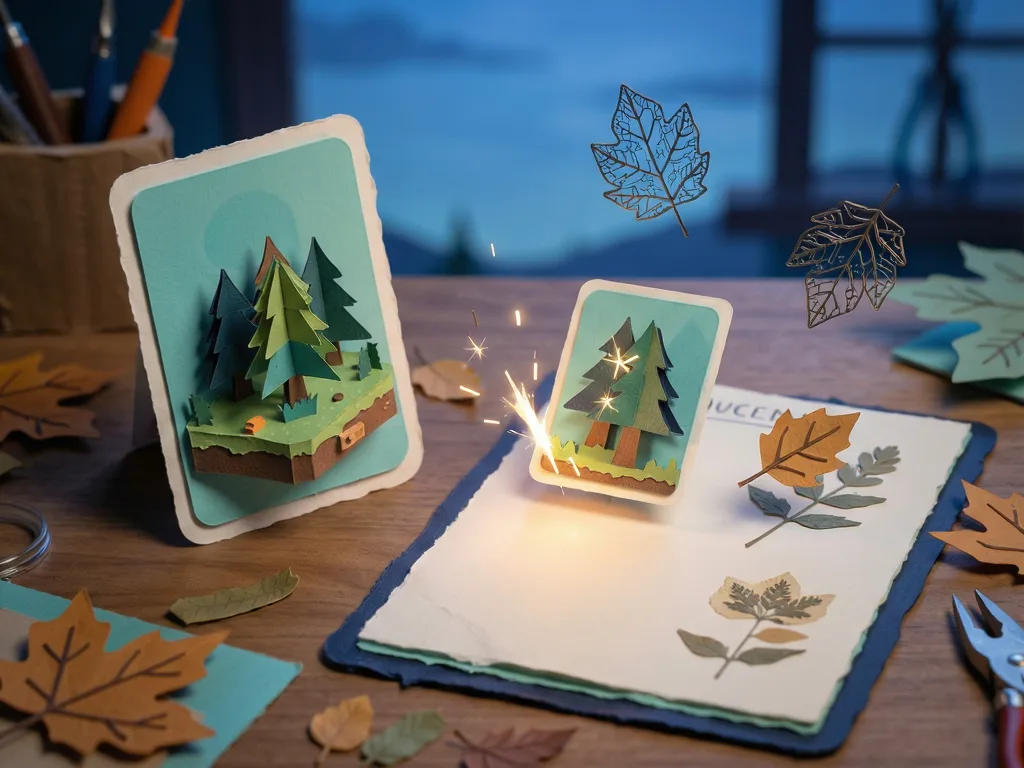
The four projects illustrate different levels of ambition and effort. Tree Appreciator was the smallest and required no iteration at all—a single prompt in the regular Claude chat interface, no Claude Code needed, produced a mobile-friendly spot-the-difference game about algorithmically generated trees, complete with a herbarium for collected specimens. Willison notes that telling models to use three.js works well, since Claude lacks its own image generation model but can build full-color 3D models that look and feel excellent.
Emberwick, a top-down fantasy role-playing game, took considerably more playtesting and prompting. Built through a series of escalating requests—first an engine demo with a village and transparent walls, then terrain, basements with tunnels, and a rocky mountain containing a sleeping troll, and finally a full game with quadrupled playable area, a plot, twists, and a magic system—it reached a finished state with a story that takes about 15 minutes to play through. Willison says he was emotionally affected by the ending, despite his creative input amounting to little more than "it's a fantasy village and there's a troll asleep in a cave."
Battle Drones, a Command & Conquer-style real-time strategy game, is his most successful project. First built in July using Claude Fable 5 in a workable but unremarkable 2D form, it was transformed after he prompted Opus 5.5 to make it a lot more fun and later to port it to three.js. It now supports 2-4 player multiplayer via a vibe-coded WebSockets relay server, medals, replays, seven maps, a random map generator, and rule variants called mutators. It also lets different LLMs play against each other in a mode that advances the game five seconds and then pauses so models can interpret the state and issue commands; a replay shows Claude Haiku 5.5 versus GPT-6 Luna. Willison released it under the Apache 2.0 License last Tuesday, and on Wednesday Gabriel Turpin released Panache, a fork reimagining the game for steampunk 1900s Belle Époque France with new models, music, and an animated intro.
Quarter Sun Cove, also called Pumpkin Farmer, is a cosy farming simulator inspired by Willison's home in Half Moon Bay, California, home of the annual Half Moon Bay Art and Pumpkin Festival and its giant pumpkin weigh-off. Players tend a giant pumpkin and plant regular ones for sale in October, then enter the weigh-off. Every character is a vegetarian animal—the mayor is a pelican, and players can be a pelican, skunk, raccoon, possum, beaver, coyote, fox, owl, sea otter, or harbor seal, all of whom later appear with their children to buy pumpkins. Willison told Claude to "surprise and delight the user frequently," yielding mischievous raccoons, an elephant seal running the weigh-off, harbor seals rolling pumpkins into the ocean, a wandering goat, and superstitions about giant pumpkins that sometimes come true. He is still iterating and admits the mechanics are complicated—players must time plantings so pumpkins ripen on October weekends with the most visitors—and that it is not as fun as Battle Drones. The initial brainstorming session produced a spec file, after which Opus 5.5 Ultracode burned millions of tokens over nearly two days building it.

What it means for players and creators
Willison is candid about the implications. Building a computer game was once one of software development's most demanding projects, combining diverse skills over months or years; now he can produce a playable multiplayer RTS by prompting on his phone. No single project took him more than four hours of work, plus many more hours of Claude Code running on its own. He finds this both exciting and shameful, and argues the missing ingredient is serious creative investment: better taste in game design, sustained playtesting, and iteration.
He expects the games community to split. Some players will refuse anything built this way; others will embrace the widening of game development to a much broader audience, a direction he leans toward. He says he will not enter his vibe-coded games in traditional jams or competitions because he does not feel he has earned that right, and he anticipates new venues emerging for vibe game developers to compare work.
The wider industry's aversion to AI-generated assets is already visible. Willison points to an IGN story covering complaints about slop in Valve's Steam Next Fest as a recent example of the tension. With code, assets, dialog, and now game design itself outsourced to models—and results that, in his words, don't suck—that tension is likely to sharpen.
The open question is what happens when someone applies real creative effort to this workflow. Willison's four games were loosely ordered by how much effort he invested, and none represented more than four hours of his time. He wants to see games that would not have existed without AI assistance—weird, fun, uniquely personal projects. The tools, by his account, are now ready for someone to try.

Comments (0)