
DreamTrue: Counterfactual Post-Training for Action-Faithful Robot World Models
DreamTrue ranked first in AgiBot World Challenge 2026, a multi-view, cross-embodiment world model with action-faithful prediction and 6.25% defects.
Key Takeaways
- DreamTrue is a multi-view, cross-embodiment robot world model designed for action-faithful and physically plausible video prediction.
- It ranked first in the world model track of the AgiBot World Challenge 2026, achieving state-of-the-art action following on AgiBot.
- Human-assessed interaction defect rate dropped from 48.12% to 6.25%, suggesting fewer errors in robot-environment contact and motion.
- The result is promising as a benchmark outcome, but full evaluation details and real-world deployment robustness still require further validation.
Meta description: DreamTrue, a multi-view robot world model, ranked first in the AgiBot World Challenge 2026 world model track and cut interaction defects to 6.25%.
Tags: DreamTrue, AgiBot World Challenge 2026, robot world model, video prediction
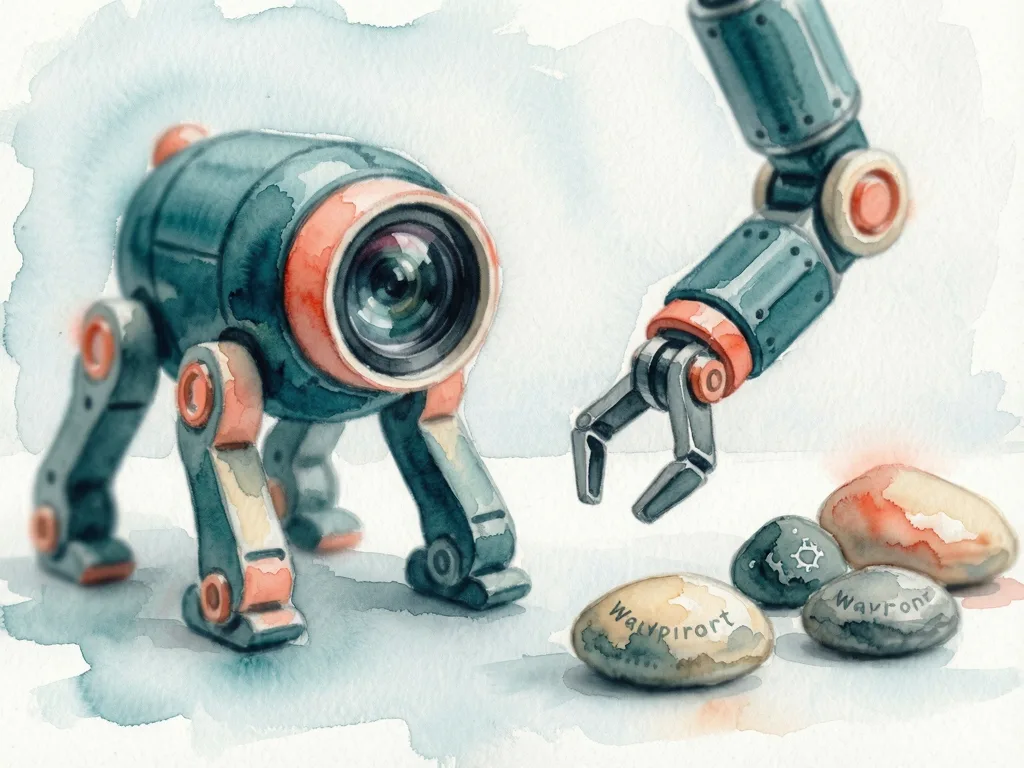
Featured image: Abstract friendly illustration of a robot simulation grid with multiple camera views and action arrows, no real people, no logos, no text.
DreamTrue robot world model is the result readers should know about if they follow robotics simulation. The system, designed for action-faithful and physically plausible video prediction, ranked first in the world model track of the AgiBot World Challenge 2026. It also reached state-of-the-art action following on AgiBot, while a human-assessed interaction defect rate fell from 48.12% to 6.25%.
Why the ranking matters
Robot world models are predictive tools that try to show what would happen if a robot moved in a given way. Instead of treating video generation as a visual trick, they are meant to support planning, testing, and safety review. For that purpose, a model needs to follow the commanded action and keep objects, contacts, and motion consistent with physical reality.
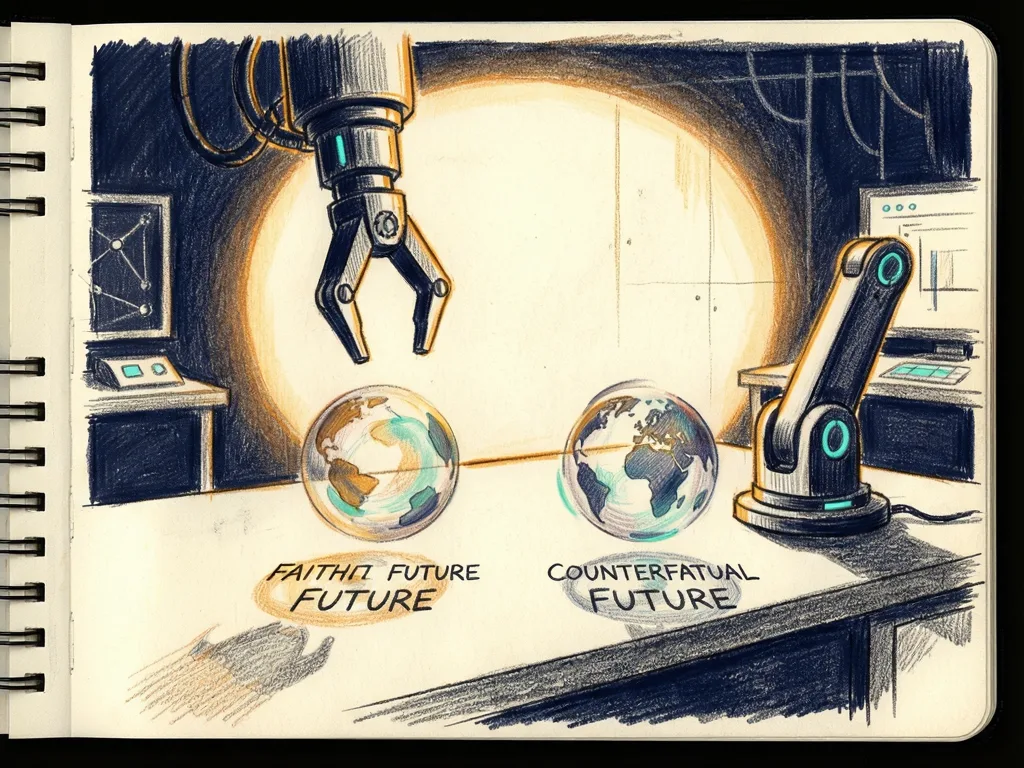
The AgiBot World Challenge 2026 result gives DreamTrue a concrete benchmark signal: in the world model track, it was ranked first. The accompanying AgiBot evaluation reports state-of-the-art action following and a lower human-assessed interaction defect rate. Those details matter because they suggest the model is not only producing plausible-looking frames, but also staying closer to the robot’s intended behavior.
Multi-view and cross-embodiment in plain terms
DreamTrue is described as multi-view and cross-embodiment. In general, multi-view systems use more than one camera or viewpoint to reduce ambiguity about depth, object position, and occlusion. A single front camera may miss whether a gripper is behind an object; several views can help a model infer the full scene.
Cross-embodiment means the model is intended to work across different robot bodies or platforms, not just one fixed machine. This is useful because robotics hardware varies widely. A model that can transfer between arms, grippers, bases, or camera setups may help developers reuse simulation resources instead of rebuilding a separate world model for every robot.
What the 6.25% defect number changes
The reported human-assessed interaction defect rate dropped from 48.12% to 6.25%. That is a 41.87 percentage-point reduction. For readers who evaluate robot video models, the number is notable because interaction defects point to failures in how the robot and environment should contact or respond to each other. A lower rate may mean fewer obvious errors in simulated manipulation and motion sequences.
Still, the public summary does not spell out the full evaluation protocol, sample size, or task distribution. That means the result is promising within the AgiBot setting, but readers should treat it as a benchmark outcome rather than proof that the model solves every real-world deployment problem.
What developers and researchers should watch next
The next step for readers is to see how this result holds up outside the challenge environment. Useful follow-up information would include the dataset tasks used for AgiBot, the camera views tested, the robot embodiments covered, and whether action-faithful video prediction translates into better policy evaluation or planning.
For now, the core news is clear: DreamTrue, a multi-view, cross-embodiment robot world model for action-faithful and physically plausible video prediction, ranked first in the world model track of the AgiBot World Challenge 2026 and showed state-of-the-art action following on AgiBot. The drop in human-assessed interaction defect rate from 48.12% to 6.25% is the most concrete signal of why this ranking matters.




Comments (0)