
OuroWorld: Animating Any 3D Scene into Varied, Infinite-Loop 3D Cinemagraphs
OuroWorld makes seamless 3D cinemagraphs from static scenes using VLM motion inference, video diffusion, and mask-free 4DGS with Fourier periodicity

Key Takeaways
- OuroWorld converts static 3D scenes into seamless, looping 3D cinemagraphs without requiring manual masks or moving-object labels.
- It uses a vision-language model to infer plausible motion, a video diffusion model to create a reference video, and then lifts the result into a 4D Gaussian Splatting representation.
- The framework enforces temporal periodicity through Fourier deformation and ground-truth-free supervision, enabling smooth loops from multiple viewpoints.
- Benchmarks report state-of-the-art dynamic quality and 3D consistency, with 70.8%–99.0% win rates over existing 3D world model baselines.
- The method can reduce animation labor for explorable 3D environments, though motion errors, complex interactions, and non-looping scenarios remain limitations.
For researchers, developers, and 3D artists working with explorable environments, OuroWorld 3D cinemagraph technology offers a way to add motion to scenes that would otherwise stay frozen. OuroWorld is a mask-free framework that turns any static 3D scene into a 3D cinemagraph: a dynamic scene with vivid, diverse motion that loops seamlessly from any viewpoint. The framework learns a mask-free 4D Gaussian Splatting, or 4DGS, model with a Fourier deformation to enforce temporal periodicity and a ground-truth-free periodicity supervision. It uses a vision-language model, or VLM, to infer plausible motion, a video diffusion model to generate a reference video, and then lifts that video into 4D. Across 3D world model benchmarks, OuroWorld achieves state-of-the-art dynamic quality and 3D consistency, with 70.8%-99.0% win rates.
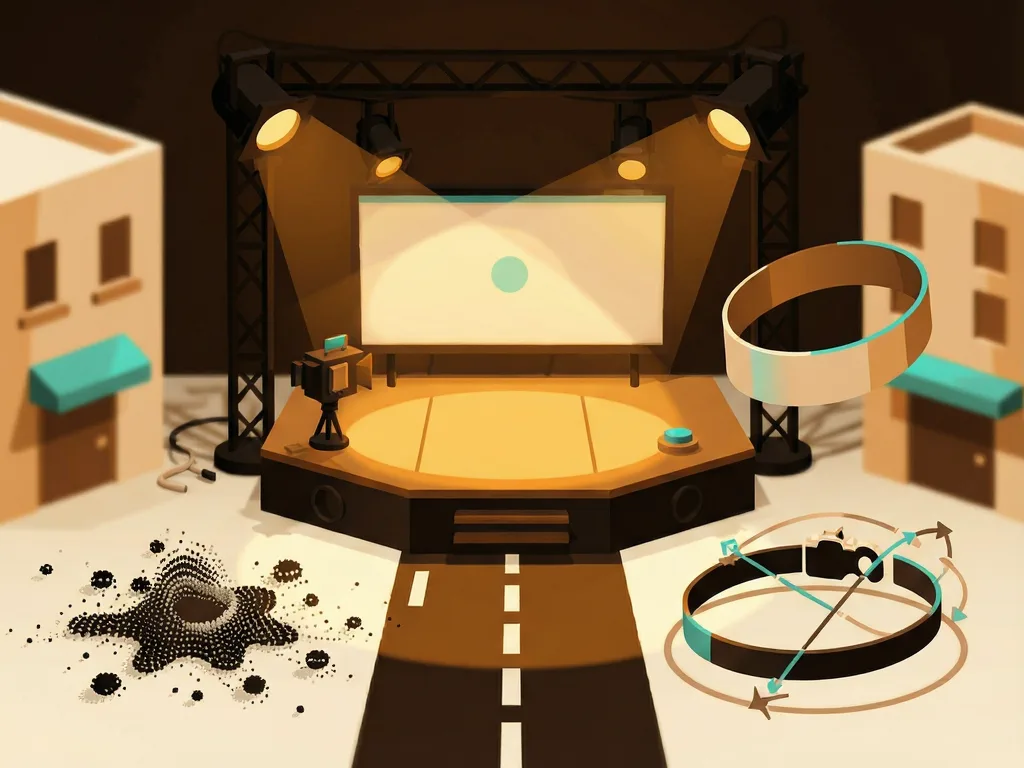
Frozen 3D scenes are still limited
Recent 3D world models generate photorealistic, explorable scenes that remain frozen in time. These systems can reconstruct geometry and appearance well enough for a user to move around a scene, but many still behave like a high-quality still environment rather than a living one. That gap matters because many practical uses of 3D world models depend on motion: virtual walkthroughs, game prototyping, simulation data, digital twins, and interactive storytelling.
A cinemagraph is a familiar reference point for this problem. In 2D, a cinemagraph keeps most of a scene still while one or more elements move in a loop, such as leaves swaying or water flowing. OuroWorld applies the same idea in 3D. The goal is not full physics simulation, but plausible, repeatable motion that can be explored from multiple viewpoints without breaking the scene’s structure.
A motion pipeline without masks
The framework is described as mask-free, meaning it does not require manually painted regions, per-scene segmentation, or explicit moving-object labels. That is important because mask-based animation workflows can become slow and brittle when scenes contain complex geometry, lighting, or many possible moving parts.
OuroWorld begins by asking a VLM to infer plausible motion for a static 3D scene. A VLM can combine visual context with language reasoning to suggest what might move: curtains, water, foliage, flags, particles, or other scene elements. The next step is a video diffusion model, a generative video system that creates a reference video from the inferred motion. The reference video gives the system a time-varying target, but a single video is still only one viewpoint.
The core technical step is lifting that reference video into 4D, meaning three spatial dimensions plus time. OuroWorld learns a mask-free 4DGS model. 4DGS extends Gaussian Splatting, a rendering method that represents a scene with many small Gaussian-like points, into a dynamic setting. The model uses a Fourier deformation to enforce temporal periodicity. Fourier deformation means the system represents motion with repeating frequency components, which helps make the loop close smoothly. It also uses ground-truth-free periodicity supervision, a training signal that encourages consistent looping behavior without requiring paired real-world dynamic videos for every scene.
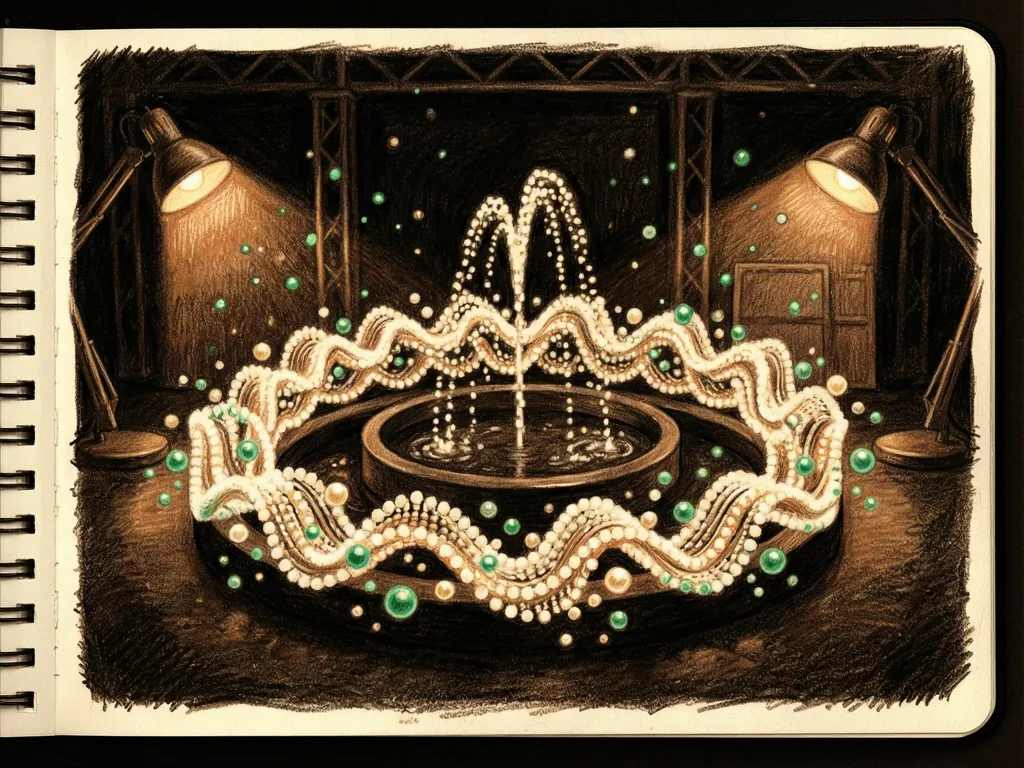
Why the benchmark win rates matter
The reported results place OuroWorld ahead of existing 3D world model baselines on dynamic quality and 3D consistency, with 70.8%-99.0% win rates across benchmarks. Those numbers do not mean the model solves every motion problem. They mean that, in the tested comparisons, evaluators or metrics preferred OuroWorld’s results over the compared methods in a majority of cases, with the range reflecting variation across benchmarks or scenes.
Dynamic quality refers to how believable and lively the motion appears. 3D consistency refers to how well the motion holds up when viewed from different angles. A method that only animates one video frame may look convincing in a single view but fall apart when the camera moves. OuroWorld’s use of 4D lifting and periodic supervision is aimed at that exact failure mode.
For readers, the practical takeaway is that OuroWorld is a step toward reusable 3D scenes that can breathe without handcrafted animation. It can turn a captured static scene into an explorable animated one, which could reduce the labor needed to make virtual environments feel alive.
What this changes for 3D world building
The most immediate value is in workflows where static 3D captures already exist. If a scene has been reconstructed as a 3D representation, OuroWorld can add a looping motion layer rather than requiring a new capture or a full animation rig. That makes it attractive for previewing environments, generating interactive media, or creating testbeds where motion matters but production animation budgets do not.
The method also highlights a broader trend in 3D generation: combining large-scale generative models with explicit 3D representations. Video diffusion models are good at producing appearance and motion, but they can struggle with viewpoint consistency. 4DGS is good at structured 3D representation, but it needs motion data. OuroWorld connects the two by using generated video as a motion guide and then enforcing periodicity so the result can loop.

There are still obvious questions for future work. The motion comes from a VLM and a video diffusion model, so errors in those systems can propagate into the 3D result. Complex interactions, non-looping motion, or scenes where only tiny elements should move may be harder to handle. The framework also assumes that periodic motion is a useful constraint, which fits cinemagraphs well but does not fit every dynamic 3D application.
Even with those limits, the result is notable: a mask-free path from static 3D scenes to 3D cinemagraphs that can be viewed from multiple angles and loop over time. For 3D world models, the next challenge is no longer only whether a scene can be reconstructed, but whether it can be made alive without manual labor.
Meta description: OuroWorld turns static 3D scenes into looping 3D cinemagraphs, using VLM motion, video diffusion, and 4DGS with 70.8%-99.0% benchmark win rates.
Tags: OuroWorld, 3D world models, 4D Gaussian Splatting, video diffusion, 3D cinemagraphs
Featured image: An abstract friendly illustration showing a static 3D point cloud becoming a gently looping animated scene, with soft glowing splat-like points, no real people, no logos, and no text.


Comments (0)