
SuperNav: A General-Purpose Agentic Navigation Framework for Any Task Across Any Environment
SuperNav uses a multimodal model with tools, progress tracking, and context for robot navigation, improving task success in quadruped deployment.
Key Takeaways
- SuperNav is a general-purpose agentic navigation framework that uses a pretrained multimodal model as the robot’s navigation controller, without navigation-specific fine-tuning.
- It coordinates robot behavior through tool use, task-progress tracking, and context management, enabling multi-step actions such as searching, planning, revising, and continuing toward goals.
- In tests on single-object, multi-object, and demand-driven navigation, SuperNav reported higher success rates than baselines and was also deployed on a real quadruped robot.
- The approach may reduce the need for separate task-specific navigation policies, but its real-world reliability, safety, and performance across diverse environments remain unproven.
- Future evaluation should clarify exact success rates, baselines, environment details, compute and memory costs, and failure cases for ambiguous or changing tasks.
Meta description: SuperNav is an agentic navigation system that uses a pretrained multimodal model, tool use, progress tracking, and context management for robot tasks.

Tags: agentic navigation, multimodal model, robot navigation, quadruped robot, SuperNav
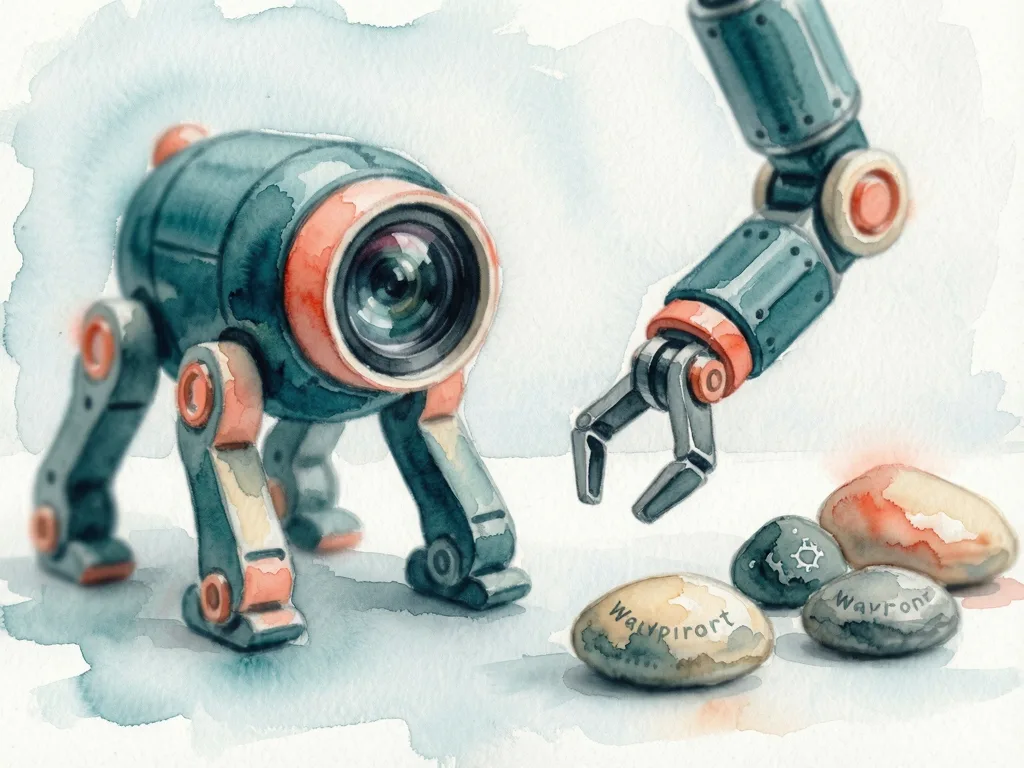
Featured image: abstract friendly illustration of a quadruped robot following a glowing route through indoor scenes; simple path markers; no real people, logos, or text.
SuperNav is an agentic navigation system that has been tested on a quadruped robot and evaluated across several navigation tasks. For readers following embodied AI, the update shows how a pretrained multimodal model can direct robot movement without navigation-specific fine-tuning. In the reported experiments, SuperNav achieved higher success rates than the evaluated baselines, and the system was also deployed in a real-world setting.
A general model as navigation controller
Many robot navigation systems rely on specialized pipelines or trained policies that are tuned for particular tasks, environments, or movement patterns. SuperNav moves in a different direction. It uses a pretrained multimodal model as the decision-making layer for navigation, while the system itself provides the structure needed to carry out the task.
The model is not described as a navigation-only network. Instead, it coordinates movement through tool use, task-progress tracking, and context management. Tool use means the agent can call capabilities that help it interpret the environment, choose actions, and check whether an action worked. Task-progress tracking tells the system what has already been accomplished and what still needs to be done. Context management helps the agent keep relevant information about the scene and the current request available over time.

This design matters because navigation is rarely a single action. A robot may need to search, remember, revise a plan, and continue toward a goal after partial progress. An agentic framework can make those steps more coherent than a system that only outputs movement commands.
What the reported results cover
SuperNav was evaluated on three navigation styles. Single-object navigation asks the robot to locate one target. Multi-object navigation requires the robot to find or visit several targets, which adds planning and memory pressure. Demand-driven navigation is based on higher-level requests rather than a simple fixed route.
The reported experiments show higher success rates than the evaluated baselines across these task types. The source does not provide exact success-rate numbers, baseline names, or detailed environment information, so the result should be understood as a relative outcome within the tested setup.
The separate real-world deployment on a quadruped robot is important because it moves the work beyond simulation or limited testing. A quadruped already needs to deal with uneven ground, obstacles, and changing layouts. Still, one deployment does not prove the same level of performance across all homes, offices, or outdoor environments.
Why this approach may spread
The broader value is not only the reported success rates. SuperNav suggests a pattern that may appeal to robotics developers: use a general multimodal model as a controller, then wrap it with tools for progress tracking and context. If that pattern works across more tasks, teams may spend less time building separate policies for each navigation scenario and more time improving the agent loop itself.

For non-experts, the practical takeaway is that robot navigation may become less tied to preprogrammed routes and more tied to goal understanding. A robot could, in principle, respond to a higher-level request while still needing reliable perception, motion planning, and safety checks underneath.
This does not mean the robot has no navigation ability. It means the navigation behavior is coordinated by a general-purpose model rather than a policy trained only for navigation. The difference can be useful when tasks change, but it can also introduce new risks, including slower decisions, unclear failure modes, or difficulty maintaining context in long tasks.
What to watch next
Future coverage should look for more precise benchmark details: success rates, trial counts, environment types, and the baselines used for comparison. It should also clarify how much compute and memory the pretrained multimodal model requires when running on a robot. Those questions are important because a navigation agent may need to make frequent decisions in real time.
Readers should also watch for failure cases. Task-progress tracking and context management can be difficult when a request is ambiguous, when multiple targets are far apart, or when the scene changes during the journey. A system that performs well in controlled experiments may still need stronger recovery behavior in messy real-world settings.
SuperNav’s reported deployment on a quadruped robot is the most concrete signal so far. For now, it looks like an early demonstration of agentic navigation rather than a finished product.




Comments (0)