
From Traces to Agentive Worlds: Language World Models for Simulating Interactive Environments
Trace2Env rebuilds text environments from traces via a worldbook, enabling faithful, stateful, long-horizon simulation for testing and training agents

Key Takeaways
- Trace2Env is a training-free framework that builds language world model agents to simulate text environments from action-observation traces, enabling testing and training without real systems.
- It reconstructs environment dynamics offline using a “worldbook” containing schemas, transition rules, constraints, invariants, evidence, and demonstrations for more faithful simulation.
- At runtime, the agent consults the worldbook, episode state, and episodic memory to infer next observations and state changes, with a harness verifying and committing updates for long-horizon consistency.
- The approach is useful for creating safe, reproducible sandboxes, stateful mocks, and simulated versions of private, legacy, or unavailable text-based environments.
- Its effectiveness depends on trace quality and rule organization, so it is best as a simulation layer rather than an exact replacement for executable systems.
Meta description: Trace2Env builds training-free world model agents that reconstruct text environments from action-observation traces for simulation, testing, and agent training.

Tags: Trace2Env, language world models, agentic simulation, text environments, training-free
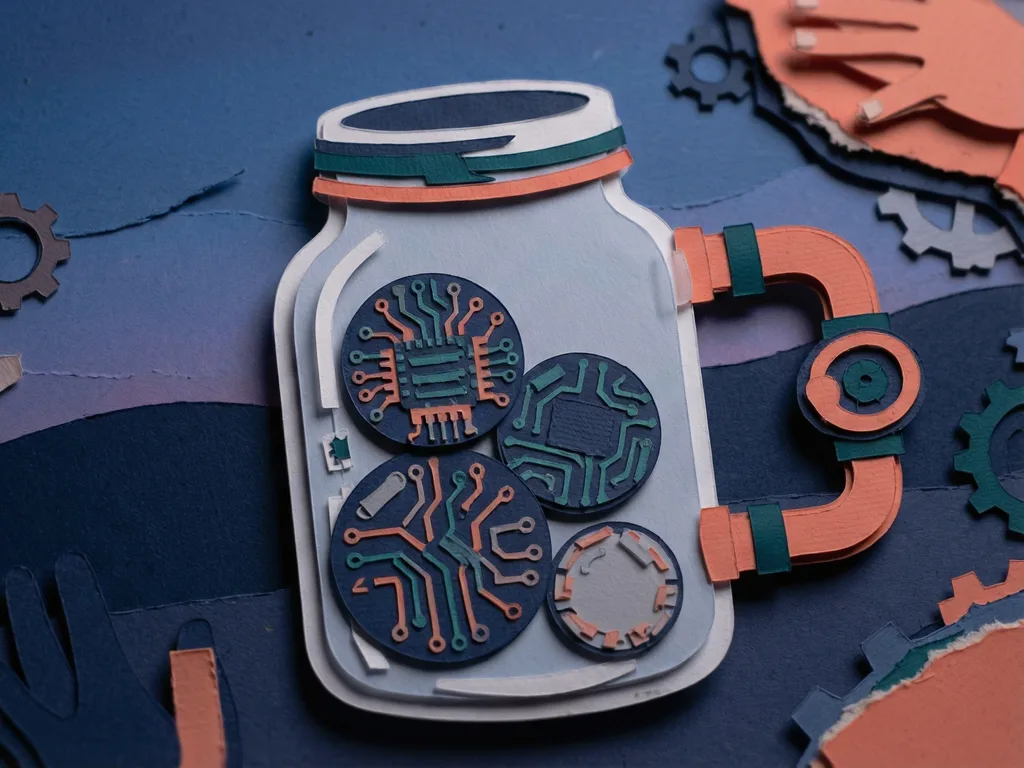
Featured image: Abstract friendly illustration of overlapping terminal windows, a structured worldbook, and arrows connecting action and observation, with no real people, no logos, and no readable text.
Trace2Env Reconstructs Text Environments from Action Observation Traces
Trace2Env is a training-free framework for agentic language world modeling, and it is aimed at developers, researchers, and QA teams that need simulated text environments without rebuilding real systems. The framework builds world model agents that serve as environments for other task agents. Its stated goal is faithful, stateful, and long-horizon simulation of textual environments. The project is described in a paper and supported by a public demo, code repository, and project page.
Why Reconstructed Environments Matter
Many agents are trained or evaluated in text-based settings: terminals, software repositories, Android and web apps, enterprise services, and text games. Real environments are often hard to use for repeated experiments. They may be private, legacy, expensive to operate, or risky to modify. A simulated environment can let developers test an agent many times, compare runs, and keep sensitive systems offline.
Trace2Env takes that idea one step further. It does not recover the original executable system. Instead, it reconstructs environment dynamics from historical action-observation trajectories. In plain terms, an action-observation trajectory is a sequence of things an agent did and what the environment showed back. Those traces become the raw material for a model of how the environment behaves.

How the Worldbook Turns Traces into Rules
During offline reconstruction, Trace2Env organizes the traces into a worldbook. The worldbook contains environment schemas, transition rules, constraints, invariants, grounded evidence, and demonstrations. This structure is meant to keep the simulated environment more than a loose prompt. It gives the model explicit pieces to consult when deciding what should happen next.
The schemas describe the kinds of states and actions involved. Transition rules capture how one action changes the environment. Constraints and invariants describe things that should remain true or cannot be violated. Grounded evidence links the learned rules back to the observed traces, while demonstrations provide examples of valid behavior. Together, these parts aim to support a more faithful simulation of the environment being recreated.
What Happens During Runtime
At runtime, the world model agent actively calls tools to inspect the worldbook together with the maintained episode state and episodic memory. The episode state represents the current situation in the simulated environment. Episodic memory gives the agent access to what has already happened in the same episode.
From that information, the agent infers the next observation together with the state changes that should persist. A shared runtime harness then verifies the proposal and commits the accepted changes. This verification step is important because it gives the simulated environment a clear record of what became true. It also allows the consequences of earlier actions to carry into later turns, which is central to long-horizon simulation.

Where Trace2Env Could Be Used
The framework points to several practical uses. It could help train agents without the real system, test agents in safe and reproducible sandboxes, build stateful mocks for tools and APIs, or reconstruct unavailable, private, or legacy environments. A mock that remembers state is more useful than a fixed fake response, especially for debugging workflows where one action affects the next.
The evaluation is not tied to a single environment domain. The paper evaluates Trace2Env on terminals, software repositories, Android and web apps, enterprise services, and text games. The same framework can also be applied to other text-interactive systems, including internal enterprise tools, ticketing workflows, cloud and DevOps consoles, API and MCP backends, and other textual worlds.
The project links are available for inspection: a Hugging Face demo of a fake Terminal built by Trace2Env, the code repository, and the project page. They are:
https://huggingface.co/spaces/Quanyu001/trace2env_demo
https://github.com/ruyue0001/Trace2Env
https://quanyulong.net/trace2env/
Who Should Use It and Who Should Skip It
Teams that already have action-observation traces may find Trace2Env most useful. It fits cases where the goal is not a perfect executable replica, but a safe, reproducible text environment for agent testing, tool mocking, or workflow reconstruction. Researchers studying long-horizon agent behavior may also benefit from running agents against a language world model instead of live systems.
Readers who need exact low-level system behavior should treat this as a reconstruction layer, not a replacement for the original executable environment. Trace2Env builds a world model from traces and checks proposed changes through a runtime harness. Its quality therefore depends on the available traces, the organization of the worldbook, and the rules encoded in the simulation.


Comments (0)