
An Ordinary Plugin That Gives You an Edge
Review hook chains, mod moves, and failure modes in AI pipelines; a practical checklist for transparency, reversibility, and safe debugging.
Key Takeaways
- The article presents a hook chain as a practical debugging and audit framework for understanding how plugins, adapters, or AI pipeline components observe, modify, or pass control between system stages.
- Many failures in modular AI systems come from interactions inside the chain, not from any single component, so transparency, reversibility, and safety under pressure are more important than simply checking whether a mod “works.”
- The core idea is to reduce every modification to a few observable moves, creating a shared vocabulary for asking what a mod can read, change, persist, or affect in future requests.
- Failure modes should be discovered through modeling the chain, including inputs, hooks, state, retries, and outputs, to reveal structural risks such as race conditions, privacy leaks, cost blowups, or conflicting writes.
- The framework is most useful for software builders, AI engineers, product leads, and security-minded researchers, though quantitative claims would need verification from the full source material.
Meta description: Read a practical look at hook chains, the three moves every mod makes, and modeled failure modes, plus who should use it and who should skip it.
Tags: hook chains, mod failure modes, AI pipelines, model evaluation, hands-on review
Featured image: Abstract friendly illustration of linked hooks, three directional arrows, and warning markers, no people, no logos, no text.
Why this framework matters
This review is for software builders, AI engineers, product leads, and security-minded researchers who want a compact way to inspect a hook chain: the sequence of intercept points where one component can observe, change, or hand off control to another. The source material promises a hands-on look at that chain, the three moves every mod makes, and failure modes found through modeling. Its value is a checklist for asking whether a modification is transparent, reversible, and safe under pressure.
The article frames a mod, short for modification, as something that does more than sit inside a larger system. It hooks into behavior, changes what users see, and creates side effects that may surface later. That framing is useful because many failures in modular AI and plugin-style software come from interactions, not from any single component. A model, adapter, prompt wrapper, or middleware can work alone and still create a cascade when it sits behind another hook.
What the write-up is trying to solve
Many teams ship a mod by asking, does it work? The better question is, what happens when it works too well? A hook can rewrite requests, add context, filter outputs, route calls, or persist state. Each action may be reasonable in one place and dangerous in another. The source material uses the hook chain to make that boundary visible. Instead of treating a modification as a black box, it invites readers to follow the path: where the system enters, where the mod acts, where control returns, and where errors are recorded.
The excerpt available for this review does not include a named model version, dataset, test score, price, or publication date beyond the short teaser text. It does say the work is a hands-on look at a hook chain, the three moves every mod makes, and failure modes found when modeled. Those details are enough to evaluate the editorial angle, but not enough to verify quantitative claims. Readers should treat any numeric result as something to confirm in the full source.

The hook chain as a debugging tool
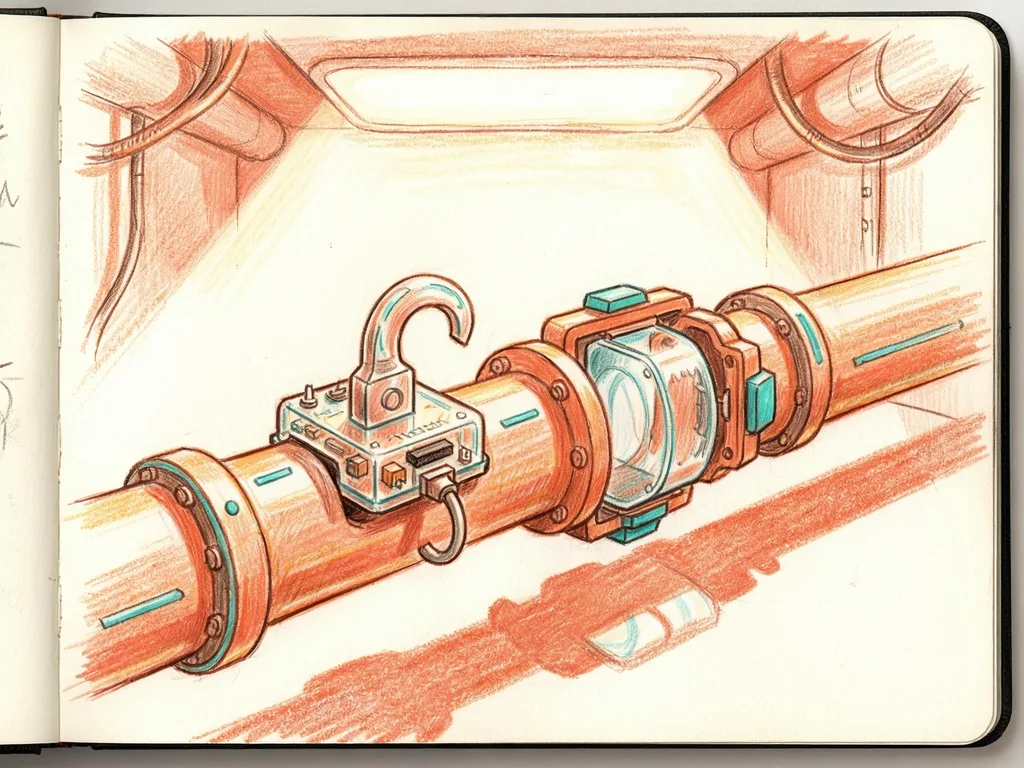
In plain terms, a hook chain is a sequence of entry and exit points that lets one layer influence another. In AI pipelines, it can be the path from user input to prompt assembly, model call, tool execution, response post-processing, and storage. In plugin systems, it can be callbacks that decide whether a request is allowed, rewritten, retried, or logged.
The article’s approach is useful because it names the structure that often remains invisible. A team may only see the final output, not the chain that produced it. When a response is wrong, the fix might not be the model. It might be an older hook, a missing timeout, a duplicated state write, or a context injection that changed the meaning of a later call. A hook-chain mindset makes that debugging path explicit.
For non-experts, ask three questions at each link: What can this step see? What can this step change? What happens if it changes nothing? Those questions turn abstract architecture into a concrete audit. They also connect to the article’s hands-on look, because the most informative failures are visible when you trace data through the chain instead of reading only the final answer.
The three moves and why they matter
The pattern in the source is that every mod makes three moves. The excerpt does not list those moves in full, so this review does not invent them. Still, the idea is strong: a modification can be understood by the basic actions it performs on a system. Whether the moves are interception, transformation, and persistence, or another set, the point is to reduce a complex plugin or module to a few observable behaviors.
That reduction matters because it gives a shared vocabulary. Product teams often argue in vague terms: “the model is unsafe,” “the plugin is slow,” “the prompt broke.” A three-move model shifts the conversation to mechanisms. Did the mod read sensitive context? Did it alter a response in a way that changed user expectations? Did it write state that affects future requests? Those are testable questions.
The phrase every mod is broad, so treat it as a design heuristic, not a law. Some components may only pass through data, some may fail closed, some may be read-only. But if a component can observe, change, or remember, it has entered the territory where failure modes become possible. The article asks readers to find the three moves before asking whether the system is safe.
Failure modes from modeling, not guesswork
The most promising part is failure modes found when the author modeled them. A model here means a simplified representation of the chain: inputs, hooks, state, timing, retries, and outputs. Modeling is not production testing, but it is often the fastest way to reveal structural risk. It can show how a harmless hook behaves when another hook adds latency, when a tool call fails, when a context window overflows, or when two mods write to the same session state.
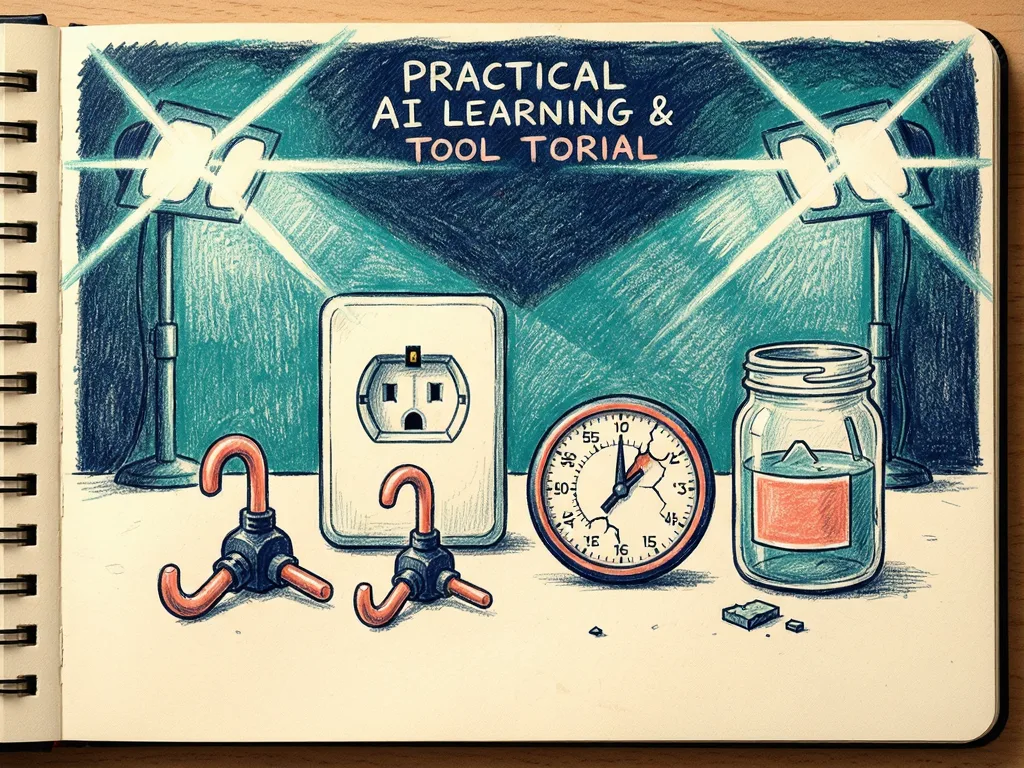
Failure modes are more useful than a single bug report because they describe classes of behavior. A race condition may appear only when two hooks run in parallel. A privacy leak may appear only when logs persist a transformed request. A cost problem may appear only when a retry hook multiplies calls. By naming the mode, the team can create a test, add a guardrail, or change the chain order.
For readers, build a small model before shipping a complex mod. Draw the chain. Mark every read, write, call, and fallback. Then ask what could happen if two links disagree. This is where the article’s hands-on angle earns its keep. It is a method for finding problems before users do.
What remains unverified
Because the available material is short, several normal review questions remain open. Does the hook chain cover synchronous calls, asynchronous tools, streaming responses, and persistent memory? Are the three moves defined consistently across AI, software, and game-modding contexts? Does modeled mean a formal simulation, a mental model, or examples? Does the full write-up include code, diagrams, test cases, or risk categories?
Those gaps do not make the piece weak. They make it a useful preview that should be completed before use as a production standard. The strongest lesson is caution: do not let a clean framework imply a complete safety story. A hook chain can explain how failures propagate, but it cannot replace logging, permission checks, isolation, and monitoring.
Who should use it / who should skip it
Use this material if you build modular systems, AI pipelines, plugins, tool-calling frameworks, or agent workflows and need a simple way to inspect where behavior can change. It is especially valuable for teams that keep blaming the model when the real issue is the chain around it. Readers who want a checklist for reviewing hooks, state changes, and failure propagation will get more from it than from a generic architecture overview.
Skip it, or read it with caution, if you need a verified benchmark, a named model version, a dataset result, a price, or a compliance claim. The excerpt does not provide those facts, so deployment decisions should wait for the full source and check whether the three moves and modeled failure modes map to their environment. The article is best treated as a thinking tool, not as a certification.


Comments (0)