
Create Custom TypeScript Extensions and Lifecycle Hooks for Pi Agent.
TypeScript hooks secure Pi Agent in monorepos by validating file paths, preserving state, and controlling token costs without bloating prompts.
Key Takeaways
- Custom TypeScript extensions and lifecycle hooks let teams add deterministic security and path controls to Pi Agent without increasing prompt tokens.
- They work by intercepting the DAG execution loop at lifecycle points such as beforeToolCall and afterToolExecution to validate tool arguments and output.
- Robust extensions must be type-safe, stateful, and serialization-aware to survive async interruptions and avoid race conditions in concurrent tool execution.
- Lightweight, batched telemetry and strict cleanup on cancellation preserve Pi Agent’s low-latency, low-token production behavior.
- Production use requires integration tests and mocked hook tests to catch malicious or malformed agent outputs before execution.
Meta description: Custom TypeScript extensions and lifecycle hooks help teams secure Pi Agent in legacy monorepos, control file paths, and keep token costs flat in production.

Tags: Pi Agent, TypeScript, AI engineering, developer tooling, lifecycle hooks
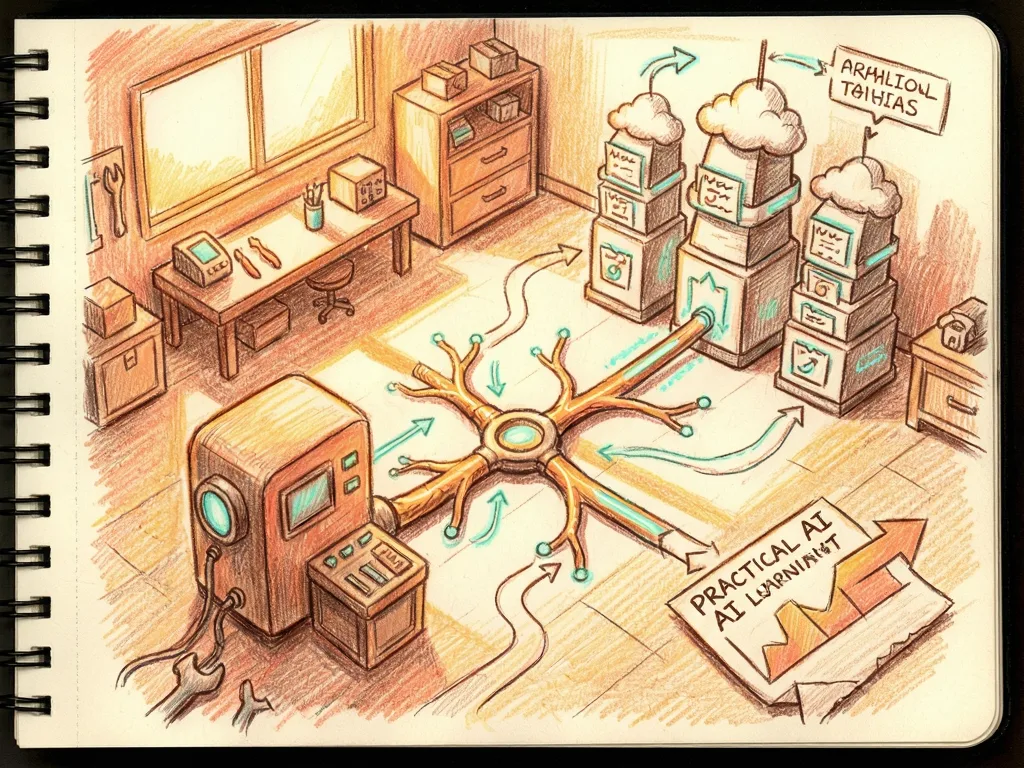
Featured image: Abstract friendly illustration style of a secure code pipeline with hooks, file guards, and telemetry buffers; no real people, no logos, no text.
Custom TypeScript extensions and lifecycle hooks for Pi Agent give engineering teams a practical way to add deterministic security checks to an agent runtime without bloating the system prompt. The approach is most useful for teams running minimalist coding loops inside legacy monorepos, where the standard harness still assumes an immutable set of four core tools and flat directory layouts. In a guide originally published in Towards AI on Medium, developers describe how to intercept tool calls, protect state across asynchronous interruptions, and keep token costs flat in production.

Why Off-the-Shelf Pi Agent Harnesses Struggle in Monorepos
Developer teams that adopt minimalist coding loops often find that a ready-made harness breaks when it encounters legacy monorepos. The built-in runtime expects a fixed set of four core tools and simple folder layouts, so engineers can be left without custom security boundaries or pre-commit validations. That is where custom TypeScript extensions become valuable: they let teams place deterministic checks inside the agent runtime, while leaving the prompt budget untouched.
The key mechanism is hooking into the directed acyclic graph execution loop, which models the runtime’s chain of agent actions. From there, extensions can inspect tool arguments, manage state persistence, and validate output. Production use also shows a warning: relying on standard event emitters can create race conditions during multi-file refactoring tasks. A robust extension therefore needs to be stateful, type-safe, and able to survive asynchronous interruptions while preserving strict execution guarantees.

A Step-by-Step Extension Pattern for Secure Runtime Control
- Pin the runtime dependencies and type rules. Start with exact typings from `@earendil-works/pi-agent-core`, including `AgentRuntime`, `HookContext`, and `ToolExecutionEvent`, plus `node:fs` and `node:path`. The exact typings ensure custom hook signatures align with the runtime’s internal dispatcher. Because extensions run inside the agent’s main event loop, loose typing or an unhandled promise rejection can crash the whole session state tree. Avoid `any` on hook payloads, since event context objects carry stateful references that mutate across tool execution phases.
- Load configuration before the first tool call. In an enterprise repository, define a `SecurityConfig` with `allowedPaths` and `blocklistPatterns`, then use an explicit loader to validate path boundaries before the runtime initializes its first tool call. Skipping this step can invite arbitrary file modifications during unsupervised background refactoring runs.
- Register lifecycle middleware at interception points. The runtime exposes `beforeToolCall`, `afterToolExecution`, and `agentStart`, each designed to inspect or mutate runtime parameters synchronously or asynchronously. For a file-modification guard, intercept `write` and `edit` before they reach disk. Inspect incoming arguments and strip out unauthorized path traversal attempts. Use `path.resolve` on `context.args.path`, compare the result with allowed paths, and raise a security violation when the target is not allowed.
- Store state through the session directed acyclic graph. For multiple tool iterations, use the context store attached to the session directed acyclic graph and the telemetry context object. Module-scoped global variables fail in concurrent worker threads, so extensions should read and write state through the provided telemetry context object rather than relying on globals.
- Serialize asynchronous hook work. Asynchronous steering messages and concurrent tool dispatches can break naive implementations. If several parallel read operations run beside a disruptive write hook, promise resolution order may desynchronize state. Use explicit serialization blocks or atomic lock mechanisms within the extension state store. A simple pattern uses an `activeOperations` map keyed by `sessionId` and `toolName`; if a task is already running, wait for it, then run `performTelemetryFlush` and remove the entry in a `finally` block.
- Clean up after cancellation. When a user cancellation signal interrupts execution, cleanup handlers must release file descriptors and clear pending timers immediately. Otherwise, concurrency bottlenecks can cause silent data corruption inside the session ledger, force hard resets of the agent workspace, and lose hours of accumulated context state.
- Keep logs and telemetry lightweight. Minimalist runtimes gain their main advantage by keeping system prompt token counts under one thousand tokens and maintaining sub-millisecond loop latency. Heavy telemetry libraries or synchronous blocking input/output can erase that benefit. A practical pattern buffers log entries in a `telemetryBuffer`, uses a `BATCH_SIZE` of 50, serializes events with `JSON.stringify`, and flushes to disk with `flushBufferToDisk`. Cache configuration lookups, strip unnecessary dependency trees, and move heavy log serialization to background worker threads. Keeping memory flat helps long-running background sessions avoid garbage collection pauses that interrupt active code generation.
Verification, Security, and What Changes for Production Teams
Custom extensions should not be trusted on shape alone. Production pipelines need rigorous integration testing to prove that malicious or malformed agent outputs are caught before execution. Unit tests for individual hooks require mocking `HookContext` and simulating edge cases such as invalid JavaScript Object Notation payloads and missing argument structures.
A representative test can create a `MockAgentRuntime`, call `registerSecurityExtension` with `allowedPaths: ['/app/src']` and an empty `blocklistPatterns` array, then trigger `beforeToolCall` with a `write` attempt to `/etc/passwd`, content `hack`, and `sessionId: 'test-1'`. The expected result is a rejection containing `Security violation`. Enforcing these checks helps ensure that extending the runtime does not introduce new attack surfaces into automated continuous integration and continuous delivery environments or developer workstations.
For readers, the value is not just a stronger guardrail. It is a way to balance deep runtime access with strict performance and security boundaries, then tailor the agent execution environment to enterprise standards without compromising loop speed. The actionable takeaways are straightforward: pin core runtime imports, validate all file modification paths before disk writes, serialize asynchronous hook operations to prevent race conditions, and maintain a flat memory profile to protect prompt budgets. The source material, titled Building Custom TypeScript Extensions and Lifecycle Hooks for Pi Agent, was originally published in Towards AI on Medium, where readers continue the discussion by highlighting and responding to the story. The source material also includes the line Generated by AI Infrastructure and Setup.
Common Mistakes to Avoid
- Treating standard event emitters as enough for multi-file refactoring; without serialization, race conditions can corrupt session state.
- Using module-scoped globals for state; they fail under concurrent worker threads and can trigger hard resets that lose hours of context.
- Skipping path validation before the first tool call; this leaves unsupervised background refactoring runs open to arbitrary file modifications.
- Declaring hook payloads as `any`; loose typing and unhandled promise rejections can crash the session state tree.
- Adding heavy telemetry libraries or synchronous blocking input/output; those can break sub-millisecond loop latency and the under one thousand token prompt budget.
- Failing to mock `HookContext` and test invalid JavaScript Object Notation payloads or missing argument structures; that can hide new attack surfaces in continuous integration and continuous delivery pipelines and developer workstations.


Comments (0)