
The memory stack for AI agents consists of building blocks, patterns, and frameworks.
AI agent memory stores context outside the window using working, episodic, and semantic types, retrieval patterns, and framework design.
Key Takeaways
- AI agents need external memory because LLM context is lost between calls; memory must store, retrieve, and update information across tasks and sessions.
- Working, episodic, and semantic memory serve different roles: current context, past events and outcomes, and durable facts or preferences.
- Reliable memory design scores importance, scopes memory by agent role, retrieves at decision points, and tracks provenance to avoid stale or mixed information.
- Framework choices matter: simple stores may suffice for short tasks, while structured memory, shared-memory controls, or append-only logs support longer workflows and multi-agent coordination.
- Teams should define memory types, write rules, retrieval points, and metrics such as recall, precision, faithfulness, and staleness before adopting a framework.
Meta description: Learn how AI agent memory stores, retrieves, and updates context across calls, tasks, and sessions, and why framework design choices matter.
Tags: AI agent memory, agent memory design, memory frameworks, multi-agent memory, context retrieval
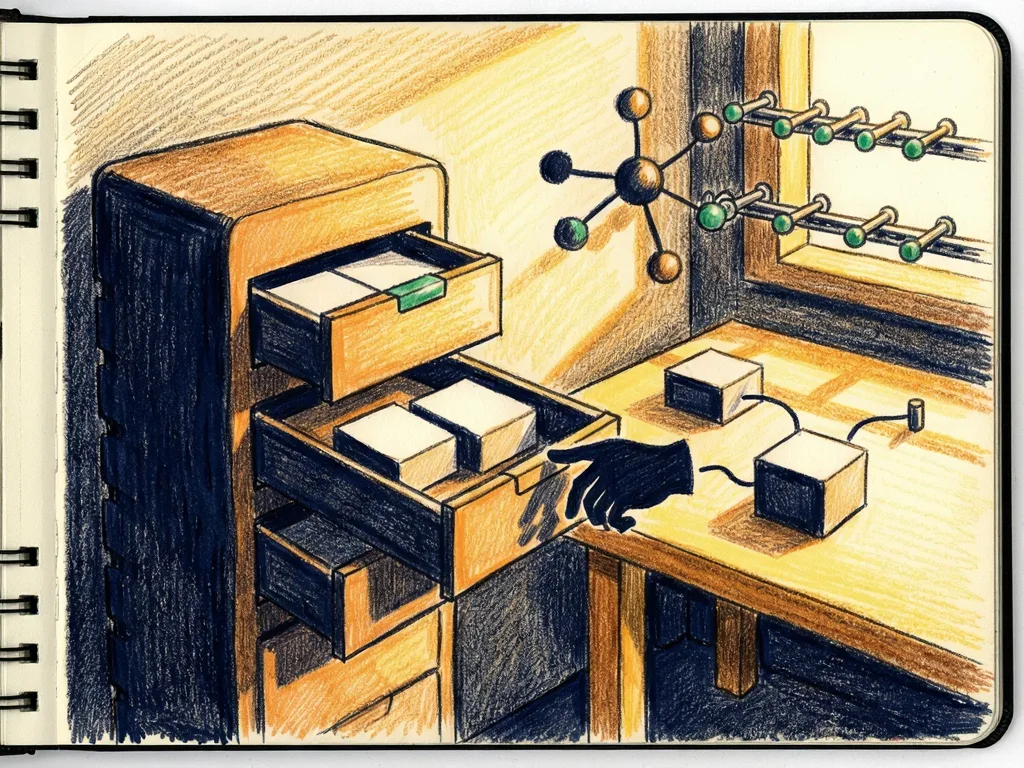
Featured image: Abstract friendly illustration of a small agent shape linked to memory blocks in a clean layout, with no visible text.
For developers building AI agents, AI agent memory is the layer that lets an agent carry information across calls, tasks, and sessions. A language model does not keep information between calls, so each run starts with only the text in the current request. That works for one-off questions, but not for agents that must avoid duplicate actions, remember preferences, continue multi-step work, or learn from failed attempts. Memory must be designed: storage, retrieval, and update rules decide whether an agent stays useful as its workload grows.
Why memory has to live outside the context window
The context window is the text a model sees in one request. Once the request ends, anything not written down is gone. Agents need state across steps, so memory stores information outside that window and brings selected parts back when useful.
There is no single agent memory mechanism. Different information needs different storage and retrieval patterns, and those choices affect reliability over longer tasks.
The memory types and how they work together
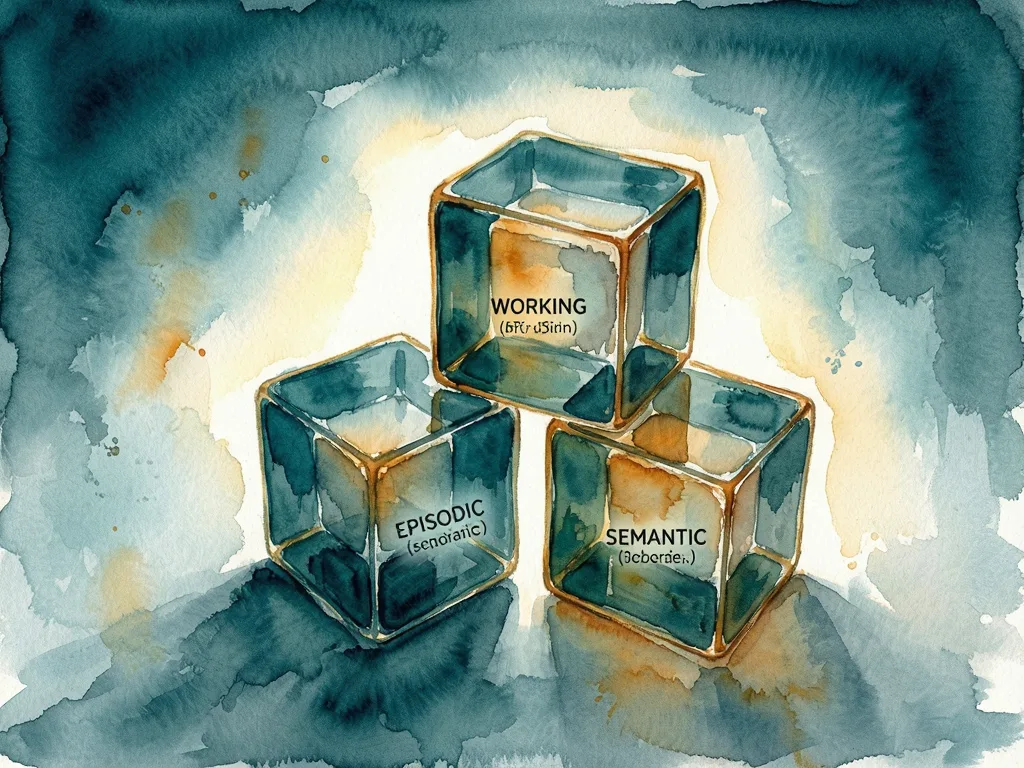
The main memory types are working memory, episodic memory, and semantic memory.
Working memory is the information an agent has in its current context window. Other memory types decide what should be brought into that context.

Episodic memory records past events. It can hold what an agent tried, what succeeded, what failed, and what result belonged to a particular task or session. Semantic memory keeps facts about entities, users, or the environment, such as preferences or stable attributes that remain useful beyond one event.
A research agent working over several days can show the pattern. After each step, it writes the result to working memory with a short expiry and tags it with metadata, such as the tool that produced it and the session it belongs to. Useful results are promoted to episodic memory with an importance score. Temporary observations may be discarded, while decisions that affect later steps are retained.
Before each tool call, the agent checks working memory for relevant state and searches episodic memory when extra context is needed. Retrieval happens at decision points, not only at the start, because the information that matters changes as the task progresses. If the task fails halfway, the agent can discard temporary working state while keeping the episodic record of completed work. When it resumes, it uses that history instead of starting from scratch.
Design patterns that keep memory reliable
Reliable memory systems score importance before writing, so transient observations and low-value tool outputs do not crowd the store. They scope memory by agent role in multi-agent systems, keeping each agent focused on its responsibilities. They retrieve at decision points throughout a workflow, not only when the task begins. They also track provenance: the agent, tool, user input, or timestamp that produced each memory. Provenance is the origin of each stored item, and it makes debugging and auditing easier.
A common failure is treating memory as one undifferentiated store. That mixes temporary notes, important facts, and outdated events. Reliable systems separate memory by purpose, apply different retrieval rules, and record how much each stored item should be trusted.
Framework choices, shared memory, and evaluation
These patterns can be built on different memory frameworks, from flat, text-based memory to structured knowledge graphs, where memory is organized as entities and relationships. That choice affects how related facts are retrieved, how relationships are represented, and how changes to stored information are handled.

A simpler memory layer works when an agent mainly needs recent context or relevant facts. More structured systems become useful when an agent needs to follow relationships between entities, reason across multiple facts, or preserve how information changed over time. The material reviewed here points to Letta, Mem0, Graphiti, and Cognee as framework examples with different storage and retrieval tradeoffs.
Multi-agent systems add another layer. When several agents read and write the same memory, concurrent updates can create conflicts. Common approaches include a central memory service with write controls, separate namespaces for each agent, or append-only logs where conflicts are resolved during retrieval.
As memory stores grow, teams need metrics rather than intuition. Retrieval recall checks whether relevant memories are found when they exist. Retrieval precision measures how much irrelevant information comes back with relevant memories. Faithfulness checks whether the agent uses retrieved information correctly in its reasoning. Staleness measures how often the system fetches information that is no longer current.
What to do next
The right memory approach depends on the agent’s workload, data, and operational requirements. For short tasks, a basic store may be enough. For longer tasks, multi-step research, or multiple agents sharing state, memory engineering becomes architectural.
Teams should start by choosing memory types, writing rules, retrieval points, provenance, and failure tests before adding a framework. Further reading includes a MongoDB blog piece on multi-agent memory engineering and a DeepLearning.AI course on building memory-aware agents.






Comments (0)