
Intern Lumina U2 is a diffusion LLM with multiple codebooks for omni-visual understanding and image generation.
Intern Lumina U2 unifies image, video and 3D understanding with image generation and editing via one discrete diffusion LLM.
Key Takeaways
- Intern Lumina U2 is a 16.9B mixture-of-experts diffusion LLM with 1.4B activated parameters, unifying image, video and 3D understanding with text-to-image generation and image editing in one backbone.
- It models visual content with multi-codebook discrete tokens, packing 8 AToken codes per visual position and using parallel diffusion decoding plus a lightweight autoregressive head to improve detail without longer sequences.
- Its Plateau-Halton sampling with V-verify reportedly delivers a 4.45× end-to-end speedup for image generation, reducing the cost of iterative diffusion denoising.
- Benchmark results show strong performance across visual understanding, video, 3D and text-to-image tasks, with competitive generation scores while using far fewer activated parameters than some larger models.
- The model was trained and evaluated end-to-end on 1,024 Ascend 910B NPUs, with additional NVIDIA validation, indicating practical flexibility across accelerator platforms.
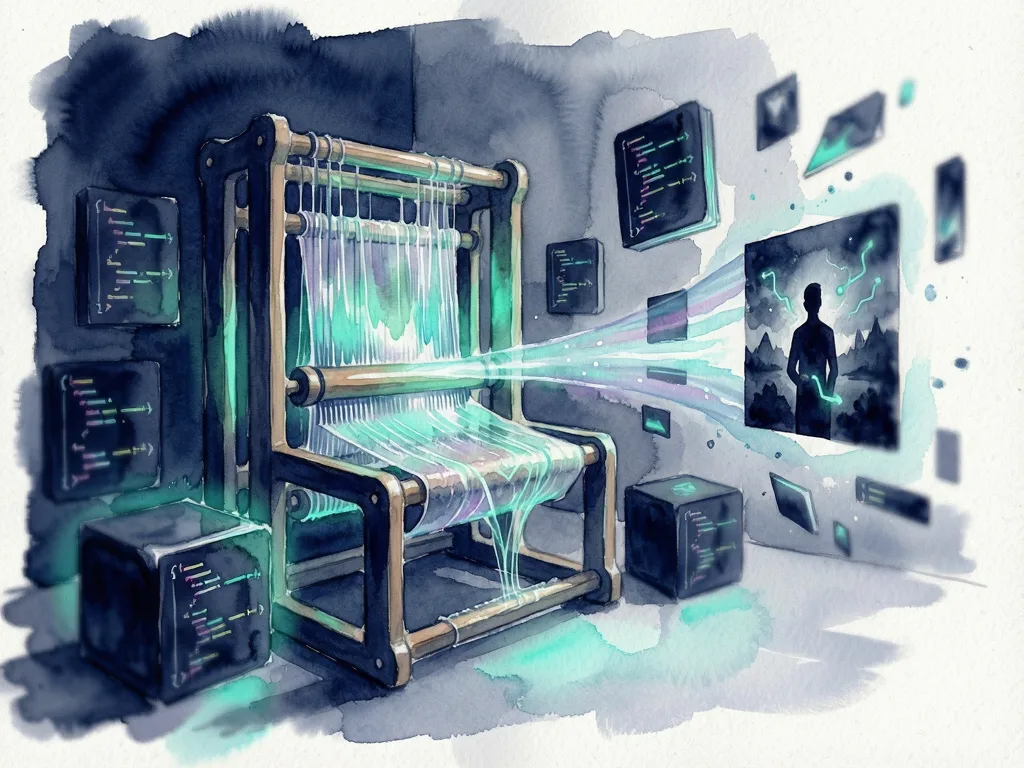
Intern Lumina U2 is a single unified model that handles image, video and 3D understanding alongside text-to-image generation and image editing. It is a 16.9B mixture-of-experts (MoE) diffusion large language model with only 1.4B activated parameters, and its developers describe it as the first diffusion LLM (dLLM) that models multi-codebook visual tokens in a fully discrete space.

The release matters because most "omni" systems today bolt a separate continuous image generator onto a language backbone. Intern Lumina U2 instead keeps understanding, generation and editing on one backbone, one token interface and one masked-diffusion objective.
One backbone for images, video and 3D
The model shares a single set of weights across tasks. Image, video and 3D understanding, text-to-image generation and image editing all run through the same masked-diffusion training objective, with no separate continuous generator attached.
That design is aimed at the long-standing split in multimodal AI: models that read images well often generate them poorly, and vice versa. By using a discrete token interface for every modality, Intern Lumina U2 tries to make generation a natural extension of understanding rather than a separate pipeline.
Multi-codebook tokens add detail without longer sequences
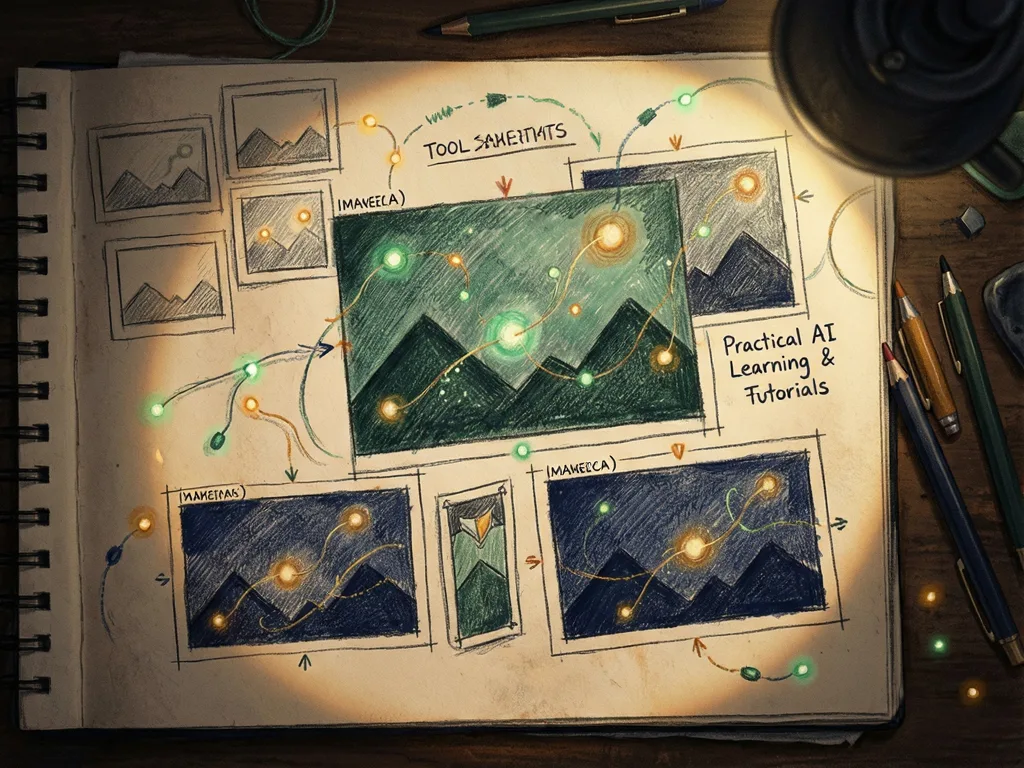
Each visual position in Intern Lumina U2 carries 8 AToken codes. This is the multi-codebook part of the design: instead of stretching a sequence to capture finer visual detail, the model packs extra information into codes at the same position.
Decoding works in two stages. The diffusion backbone decodes positions in parallel, while a lightweight autoregressive (AR) head predicts the codes within each position. The result is richer visual detail at unchanged sequence length, which keeps compute costs from ballooning.
Fast sampling with Plateau-Halton sampling and V-verify
Generation speed gets a boost from Plateau-Halton sampling with V-verify (PHV), which the developers report delivers a 4.45× end-to-end speedup for image generation. Faster sampling is a practical concern for diffusion models, since iterative denoising is typically the slowest part of the pipeline.
Trained and tested on 1,024 Ascend 910B NPUs
Intern Lumina U2 was trained, inferred and evaluated end to end on 1,024 Ascend 910B NPUs. The team also ran an NVIDIA validation pass to check behavior across platforms. This is a notable detail for teams planning deployment, because it shows the full stack was exercised on Ascend hardware rather than only on NVIDIA GPUs.
Benchmark results: understanding
On image understanding, Intern Lumina U2 lands best or tied-best on 6 of 10 benchmarks, and beats the same-backbone LLaDA2.0-Uni on 8 of 10. Reported scores include CharXiv-DQ 85.9, HallusionBench 64.6, MathVision 36.5 and DynaMath 63.6.
For video and 3D, the model is best on all three video benchmarks: Video-MME 56.7, MLVU 62.1 and MVBench 61.8. It also posts 3D MM-Vet 50.5, ahead of the 3D specialists ShapeLLM and PointLLM.

Benchmark results: text-to-image
Among unified models, Intern Lumina U2 is best on DPG-Bench (87.79), UniGenBench (86.11) and TIIF-Bench (88.57 / 87.08 short / long), and ties the best on GenEval (89). It outperforms FLUX.1-dev, and surpasses Qwen-Image on GenEval, UniGenBench and TIIF-Bench while using roughly 14× fewer activated parameters.
That parameter gap is the headline claim for efficiency-minded teams: competitive generation scores at a fraction of the activated compute.
Scientific diagrams and exam-style physics
Two narrower results stand out. On VeriphyT2IBench, the model takes the best Local score at 76.58, above GPT-Image-1 and Gemini 2.5 Flash Image. On GenExam-Physics, it records the highest relaxed score among general-purpose unified models at 44.8. Both point to diagram-heavy and reasoning-heavy image tasks, where unified models often lag behind specialized systems.
What this means for readers
If the claims hold up, Intern Lumina U2 suggests that a single discrete diffusion backbone can cover reading, generating and editing visual content without a separate generator — and that multi-codebook tokens plus PHV sampling are viable ways to get detail and speed at the same time. The Ascend training run also signals that the stack is not tied to one accelerator vendor.
The open questions are practical: how the model behaves on real editing workflows, how stable PHV sampling is outside benchmark prompts, and whether the 1.4B activated parameters translate into real cost savings once deployed. The team says questions and feedback are welcome, so independent testing is the next thing to watch.

Comments (0)