
Consistency-Adaptive Graphs for Long-Horizon Agents
ACG stores agent execution evidence in a graph, selects relevant context, and raises GPT-5.6-luna success on long-horizon tasks.
Key Takeaways
- ACG is a framework for long-horizon AI agents that stores execution evidence and its sources in a persistent graph, helping agents stay grounded in earlier findings instead of drifting from the task goal.
- Instead of relying only on prompt stuffing, summaries, or simple retrieval, ACG selects task-relevant parts of the graph for each step while respecting a limited context budget.
- The paper reports that ACG improved GPT-5.6-luna’s equally weighted average success rate across three benchmarks from 44.5% to 50.2%, with the largest gain on BrowseComp-Plus, rising from 62.4% to 73.5%.
- ACG’s traceable evidence map may also help developers debug failed runs by revealing whether mistakes came from missed requirements, stale assumptions, or ignored prior evidence.
- The results suggest that structured agent memory can be more useful than simple logs or summaries for long, multi-step tasks, though practical issues such as cost, scalability, and deployment value remain to be tested.
Meta description: ACG organizes execution evidence in a persistent graph and selects task-relevant context, raising GPT-5.6-luna success rates across three benchmarks.

Tags: ACG framework, AI agents, long-horizon tasks, GPT-5.6-luna, BrowseComp-Plus
Featured image: abstract, friendly illustration style with no real people, no logos, no text.
For developers building autonomous AI agents that must complete long tasks, the ACG framework offers a response to a familiar problem: a run can make each individual step look sensible, yet still drift away from the objective it was asked to achieve. The paper reports that ACG improved GPT-5.6-luna’s equally weighted average success rate across three benchmarks from 44.5% to 50.2%. The biggest reported jump came on BrowseComp-Plus, where success rose from 62.4% to 73.5%, a gain of 11.1 percentage points.
Why Long Tasks Make Agents Drift
An agent is not a single answer. It is a sequence of plans, tool calls, observations, and updates. Early instructions matter, but later steps also depend on what has been learned. As a task stretches, the system may need to remember why a branch was chosen, which search result supported a decision, and which requirement is still open. If the model only sees a short summary of recent steps, it may act on incomplete context. If it sees everything, the context budget may be too small.
Many teams try to solve this with prompt stuffing, summarization, or retrieval. Each has a tradeoff. Prompt stuffing can overload the model. Summaries can remove the evidence that justified a choice. Retrieval can bring back relevant pieces, but only if the stored information is organized in a way that supports later questions. The paper’s answer is to keep the task’s evidence and its origins in a structure that can be queried step by step.
How ACG Turns Evidence Into A Traceable Map
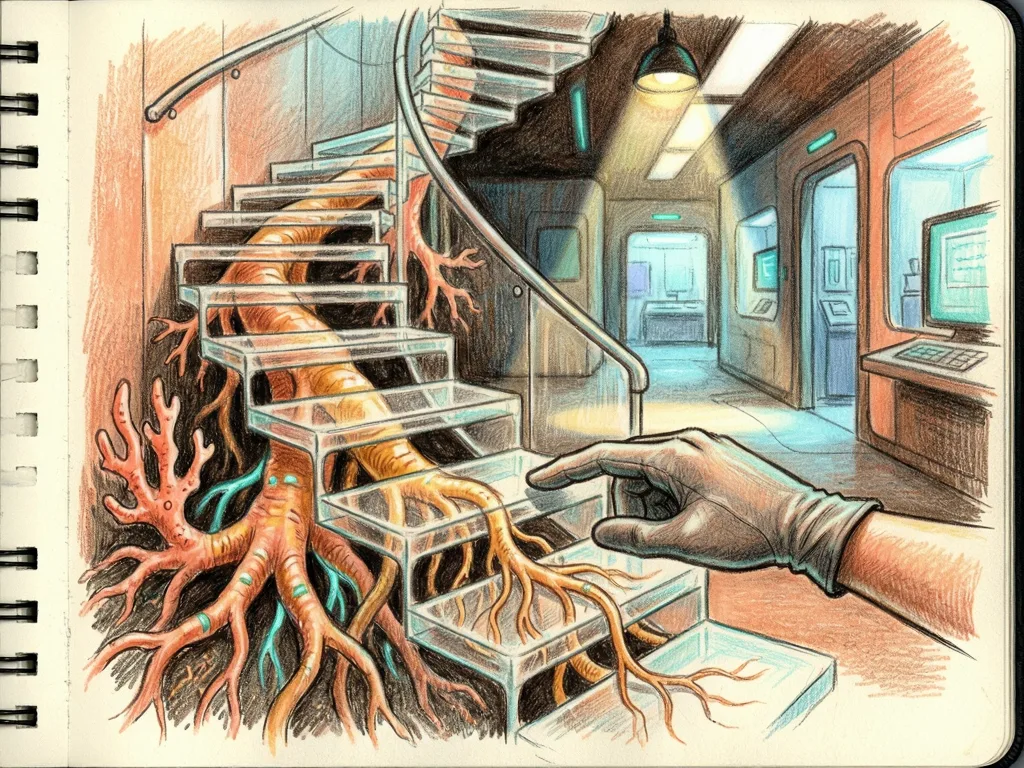
ACG, short for Adaptive Consistency Graph, stores execution evidence and the sources behind that evidence in a persistent graph. Instead of treating every new observation as just another line in a transcript, it connects the item to the task state and the context from which it came. When the agent needs to choose its next action, the framework selects the parts of the graph that are relevant to that choice, while respecting a limited context budget.
The word graph matters. In this setting, a graph is a collection of records and links. A link might show which instruction a decision followed, which tool output supported a claim, or which earlier step created the current condition. Because the evidence remains traceable, the agent can ground a new action in earlier findings rather than relying only on a compressed memory of what happened.
For builders, the practical appeal is not just better completion rates. It is the possibility of inspecting why an agent acted. If a run fails, a traceable evidence map can make it easier to see whether the problem came from a missed requirement, a stale assumption, or a decision that ignored relevant prior evidence.
What The Benchmark Numbers Show
The reported evaluation used GPT-5.6-luna and compared performance across three benchmarks. The headline figure is the equally weighted average success rate, which moved from 44.5% to 50.2%. Equal weighting means each benchmark contributes the same share to the overall result, so a single large test set cannot dominate the average. That makes the number useful as a broad consistency signal, though it does not reveal how much of the gain came from any one task family.

BrowseComp-Plus shows a sharper effect. The success rate increased from 62.4% to 73.5%, an 11.1 percentage point gain. Because the excerpt does not define BrowseComp-Plus’s tasks or scoring rule, the safest reading is that this benchmark was one of three where ACG helped most under the paper’s matched evaluation. The other two benchmark names are not provided in the material, so their contribution to the average cannot be reconstructed from the information given.
The phrase matched evaluation suggests the comparison was designed to keep the evaluation setup comparable while testing the effect of ACG. Still, the excerpt does not include the full protocol, such as number of runs, sampling method, or detailed success criteria. Those details matter for judging how robust the improvement is.
What Builders Should Watch Next
The broader question is whether agent memory should be a simple log, a summarized notebook, or a structured record that can answer later questions. ACG points toward the third option. For tasks such as browsing, research, or multi-step service workflows, the next action often depends on a requirement mentioned many steps earlier. A system that can retrieve not only text but also the source relationship may be more stable than one that keeps only the latest message.
The reported numbers are incremental but meaningful. A rise from 44.5% to 50.2% in the equally weighted average is not a dramatic single-task breakthrough, but it suggests that better evidence organization can improve many-step behavior in the reported setup. The 11.1 percentage point gain on BrowseComp-Plus is stronger and may indicate that benchmarks with many distributed facts benefit especially from traceable memory.
For teams evaluating agent frameworks, the next questions are practical. Does the graph add cost at each step? Can it scale across tools, sessions, and failures? How much does traceability help debugging, or only improve task scores? The paper gives a model result, not a deployment recipe. The useful takeaway is narrower: when long tasks fail because evidence gets lost or disconnected, a persistent graph plus per-step context selection can make the agent’s reasoning more grounded and auditable.


Comments (0)