
Diffusion-Based Reward Models
DRM treats reward as a conditional distribution p(r|x,y), preserving multimodal human preference and avoiding fixed parametric assumptions in RLHF.

Key Takeaways
- Diffusion Reward Model (DRM) reframes reward modeling as conditional density estimation over p(r | x, y), instead of predicting a single scalar reward.
- The approach is motivated by the multimodal nature of human preference, where multiple reward values can be reasonable for the same prompt-response pair.
- DRM avoids committing to a fixed parametric reward distribution, allowing more flexible representation of complex reward patterns such as multiple peaks.
- The public repository provides a new framing and implementation starting point, but the excerpt does not include benchmark scores, dataset details, or full evaluation results.
- The key next question is how to use reward distributions in RLHF, such as sampling rewards, comparing full distributions, or applying decision rules that preserve multimodality.
Meta description: Diffusion Reward Model reframes human preference as conditional density estimation over p(r | x, y), avoiding a fixed reward distribution family.

Tags: Diffusion Reward Model, reward modeling, conditional density estimation, human preference, RLHF
Featured image: abstract friendly illustration of multiple reward peaks as a smooth distribution over a prompt-response pair; no real people, no logos, no text.
If you work on reinforcement learning from human feedback (RLHF), reward modeling, or model alignment, the public Diffusion Reward Model repository offers a concrete new framing: it studies the multimodal structure of human preference and recasts reward modeling as conditional density estimation over p(r | x, y). Instead of asking whether a response deserves one fixed score, it treats the score as a probability distribution conditioned on a prompt and a response. The code is available at https://github.com/thunlp/DRM.
What the repository proposes
Diffusion Reward Model, also called DRM, changes the target of preference learning. In many reward-model setups, a model takes prompt x and response y and returns a single reward r. DRM keeps those variables but replaces the single output with p(r | x, y). That notation is read as the probability density of reward r given prompt x and response y.
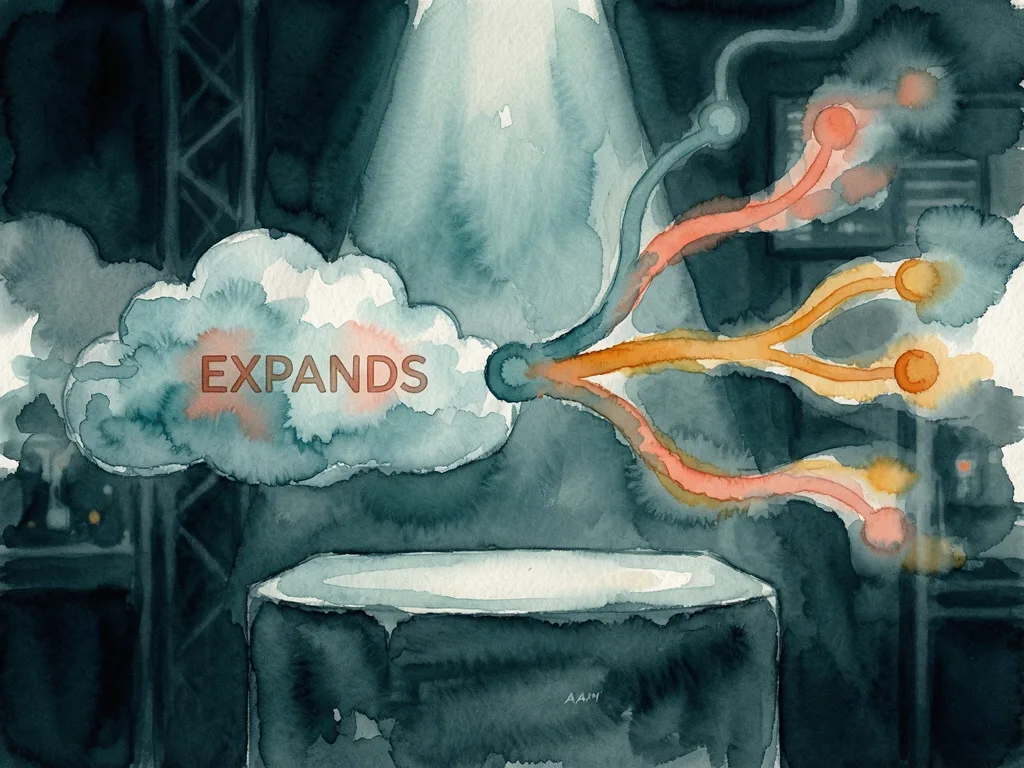
The important shift is from a point estimate to a distribution. The distribution can describe multiple plausible reward values for the same input-output pair. The proposal also states that this distribution is represented without committing to any parametric family. A parametric family is a fixed functional form, such as a normal distribution, that a model must match. By avoiding that assumption, the method can express reward patterns that do not fit a simple curve.
Why multimodal human preference matters
Human preference is often not one-dimensional. Two reviewers may like the same answer for different reasons, and different user groups may disagree about what counts as a better response. In RLHF, this can appear as multimodal preference: several reward values may be reasonable for the same prompt and response.
A single scalar reward can hide that structure by averaging peaks, treating disagreement as noise, or forcing a consensus that was never present in the data. The description says the study is motivated by this multimodal structure, which is why a distribution over reward values is a better fit than a single number. For readers building preference datasets, the framing suggests that labels may need to preserve multiple valid viewpoints rather than collapse them into one score.
How conditional density estimation changes the problem
Conditional density estimation is a statistical task where the model learns the probability of a target variable given other variables. Here, the target is reward r, and the conditioning variables are the prompt x and the response y.

That changes what a reward model must output. A scalar model outputs one number; a density model describes a shape. The shape can have one peak, multiple peaks, heavy tails, or asymmetries. The proposed Diffusion Reward Model is described as representing this distribution without committing to any parametric family.
Diffusion models are generative models that learn distributions by adding and reversing noise, so they can express complex shapes without assuming a simple curve. The name therefore suggests a diffusion-based representation for the reward distribution, while the core idea remains the conditional density p(r | x, y).
What readers should watch next
The repository link gives readers a place to inspect the implementation, but the source excerpt does not provide benchmark scores, dataset details, training hyperparameters, or evaluation results. Until those details are available in the code or paper, the contribution should be read as a reframing and a starting point for implementation.
Still, the framing is useful for anyone building alignment systems. If reward models are used to compare responses, optimize policies, or estimate preference uncertainty, treating reward as a conditional distribution may make it easier to separate disagreement among humans from uncertainty in the model. The next practical question is how to use p(r | x, y) inside RLHF: whether to sample rewards, compare full distributions, or summarize them with decision rules that preserve multimodality.




Comments (0)