
The State of LLMs in 2026 (So Far)
In 2026, coding agents moved from novelty to infrastructure as Claude Opus 4.5, GPT-5.1, OpenClaw, and security issues reshaped developer workflows.
Key Takeaways
- Coding agents crossed from novelty to infrastructure in early 2026, largely because November 2025 model releases such as Claude Opus 4.5 and GPT-5.1 became reliable enough for daily use when paired with agent harnesses like Claude Code and Codex.
- Simon Willison argued that small model improvements can push tools over an invisible usability threshold, making previously unreliable AI coding workflows suddenly practical.
- The OpenClaw project became a symbol of the 2026 agent boom, spawning similar “Claws,” driving developer experimentation, consumer hardware demand, and a short-lived social network for personal agents.
- Token costs became a major market reality: enterprises first pushed aggressive AI adoption and heavy token use, then began reining in spending as coding agents proved expensive at scale.
- Security, sandboxing, and developer anxiety dominated the conversation, while Willison’s more dramatic prediction of a major coding-agent disaster had not clearly materialized by mid-2026.
Meta description: Simon Willison's WeAreDevelopers keynote traces 2026's AI shifts: Claude Opus 4.5, GPT-5.1, OpenClaw, token costs, and what coding agents mean for developers.
Tags: coding agents, Claude Opus 4.5, GPT-5.1, OpenClaw, AI development trends
If you build software or manage people who do, the first half of 2026 has been the year coding agents stopped being a novelty and started being infrastructure. That was the throughline of Simon Willison's closing keynote at the WeAreDevelopers World Congress North America in San Jose on Friday, where he walked through the year chronologically and argued that a handful of model releases in late 2025 quietly pushed AI coding tools past a usability threshold.
The November 2025 releases that started it all
For Willison, 2026 effectively began two months early, in November 2025, when Anthropic released Claude Opus 4.5 and OpenAI released GPT-5.1. On their own, both looked like the usual incremental upgrades. But paired with their respective coding agent harnesses—Claude Code, which had existed since February 2025, and the slightly newer Codex—the combination shifted from "often make mistakes" to "reliable enough to use on a day-to-day basis." That invisible line, he said, is the thing to watch for: every so often a model improvement makes something that never quite worked suddenly work.
Willison has tracked these jumps for years using a deliberately silly test—asking models to "Generate an SVG of a pelican riding a bicycle." As of November, the results were still rough: Claude couldn't really draw a bicycle, and GPT-5.1's bicycle frame was, in his words, pretty crap. The benchmark is limited, but it remains a genuine challenge because pelicans are hard to draw, bicycles are hard to draw, and pelicans can't ride bicycles in the first place.
Also in November, the first commit landed in an obscure GitHub repository called "Warelay." That detail matters later.
A quiet December, then an ambitious January
Over the December holidays, individual developers tinkered with the new model-plus-agent combinations and began to realize how much more they could do. By January, many were putting it into action. Willison made a New Year's resolution that inverted his usual one: instead of staying focused and taking on fewer projects, he decided to take on as many as he liked and let the agents handle it. He acknowledged the experiment is still running and that he has "a lot of plates spinning right now."
He also appeared on the Oxide and Friends podcast with Bryan Cantrill and Adam Leventhal. In hindsight, he said, his LLM predictions were unambitious: he forecast it would become undeniable that LLMs write good code, that sandboxing would finally be solved, and—half-jokingly—that a "Challenger disaster" moment would hit coding agent security. Sandboxing and agent security did dominate the conversation; roughly 40 of the conference's 277 sessions touched on those topics. The specific disaster he predicted, where hijacked coding agents cause real-world economic damage, hasn't clearly materialized. He also predicted a strong breeding season for New Zealand's Kākāpō parrots, of which only 236 existed worldwide at the start of the year. The birds breed only when Rimu trees fruit heavily, which hadn't happened in four years—but this year the fruit looked excellent.
On that same podcast, the group coined a term, credited to Adam Leventhal, for the listlessness engineers feel when AI seems able to do everything: "Deep Blue." Willison described 2026 as the year everything in his profession changed faster than at any other point in his career.
The OpenClaw phenomenon and the rise of "Claws"
By the end of January, the Warelay repository had renamed itself repeatedly—first to CLAWDIS, then CLAWDBOT, then Moltbot, and finally OpenClaw. It had 8,300 commits less than two months after starting; Willison noted it now has over 100,000, making it perhaps the most vibe-coded piece of software in existence.
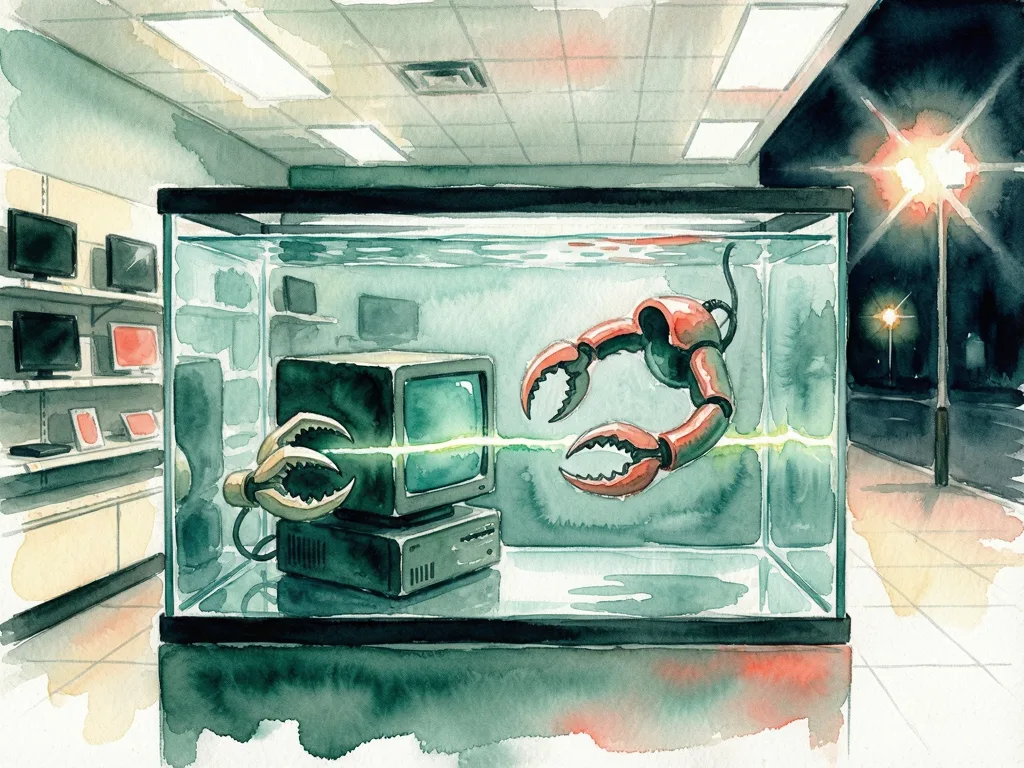
OpenClaw kicked off a wave of similar tools—NanoClaw, IronClaw, PicoClaw—which Willison likes to call "Claws," though the industry now prefers "personal agents" or "general agents." Demand was tangible: Apple stores in the Bay Area sold out of Mac Minis as people bought them to run OpenClaw, a behavior Drew Breunig likened to buying an aquarium for a digital pet. In January, MoltBook launched as a social network where users could send their Claws to talk to other Claws. It blew up on a Friday, was profiled by the New York Times on Monday, drowned in spam by Tuesday, and was acquired by Meta a month later.
February brought StrongDM's description of its "Software Factory," an approach Dan Shapiro called the "Dark Factory." StrongDM followed two rules since July of the prior year: code must not be written by humans, and code must not be reviewed by humans. Willison found it notable that a security company with decades of experience was operating six months ahead of everyone else, exploring how to trust software nobody reads.
Pelicans, token budgets, and a market finding its footing
In February, Google released Gemini 3.1 Pro, which finally produced a competent pelican on a bicycle—chain in the right place, feet on both sides, even a little fish in the basket. Google's Jeff Dean then tweeted a video comparing Gemini 3 Pro and 3.1 Pro featuring an animated pelican, a frog on a penny-farthing, a giraffe in a tiny car, an ostrich on roller skates, a turtle kickflipping, and a dachshund driving a stretch limousine. Willison admitted his benchmark had been defeated.
February also saw "Tokenmaxxing" peak, with Meta making AI adoption part of performance reviews, Microsoft pushing every employee to use AI, and Uber boasting that 90 percent of its engineers used AI workflows. Within months, Meta was cracking down on token use, Microsoft said tokenmaxxing was "not what we are optimizing for," and Uber capped employee AI spending. Agents turned out to be expensive—spending $1,000 in a day on real work became possible, and Anthropic's valuation climbed toward a reported trillion dollars. In Willison's read, AI found product-market fit in 2026, primarily through coding agents.
By March, OpenClaw install parties in China drew non-technical people queuing around the block, suggesting real demand for personal AI agents. A Claw, Willison noted, is essentially a coding agent in a less threatening hat—writing and executing code on your machine. The race now is to build a safe one, and Meta's Muse, released three weeks ago, currently sits at the top of the free chart.
The open question for the rest of 2026: whether reliability holds as agents take on more autonomy, and whether anyone solves the security problem before the predicted disaster arrives.

Comments (0)