
Mistral’s Latest Le Chonk Model Puts AI-Powered Cybersecurity in Your Business Under Your Control
Mistral has previewed Large 4, nicknamed Le Chonk, as an open-weight, self-deployable model for enterprise and government cyber defense. Its pitch centers on control, auditability, and avoiding vendor lock-in after incidents involving closed AI systems. The company claims strong security, finance, and multimodal performance, though final benchmarks remain pending. Public weights are scheduled for October 27, with a month of staged testing with developers and authorities.
Key Takeaways
- Mistral has launched Mistral Large 4 (“Le Chonk”), an open-weight AI model positioned for enterprise and government cyber defense, with public preview now and weights due Oct. 27.
- The core pitch is control: open weights allow self-deployment and auditing, reducing dependence on proprietary vendors that could revoke access to critical cyber-defense capabilities.
- Mistral claims ML4 outperforms Kimi, DeepSeek, and Meta models on cyber tasks and competes on finance and multimodal benchmarks, but the figures are preliminary and warrant skepticism.
- The month before the weight release is a staged safety process, with early testing partners using a less guardrailed version while Mistral evaluates real-world behavior with developers, security leaders, and authorities.
- Deployment flexibility is central to the offer, including self-hosting and regional APIs with an EU sovereign option, targeting buyers concerned about data jurisdiction and operational control.
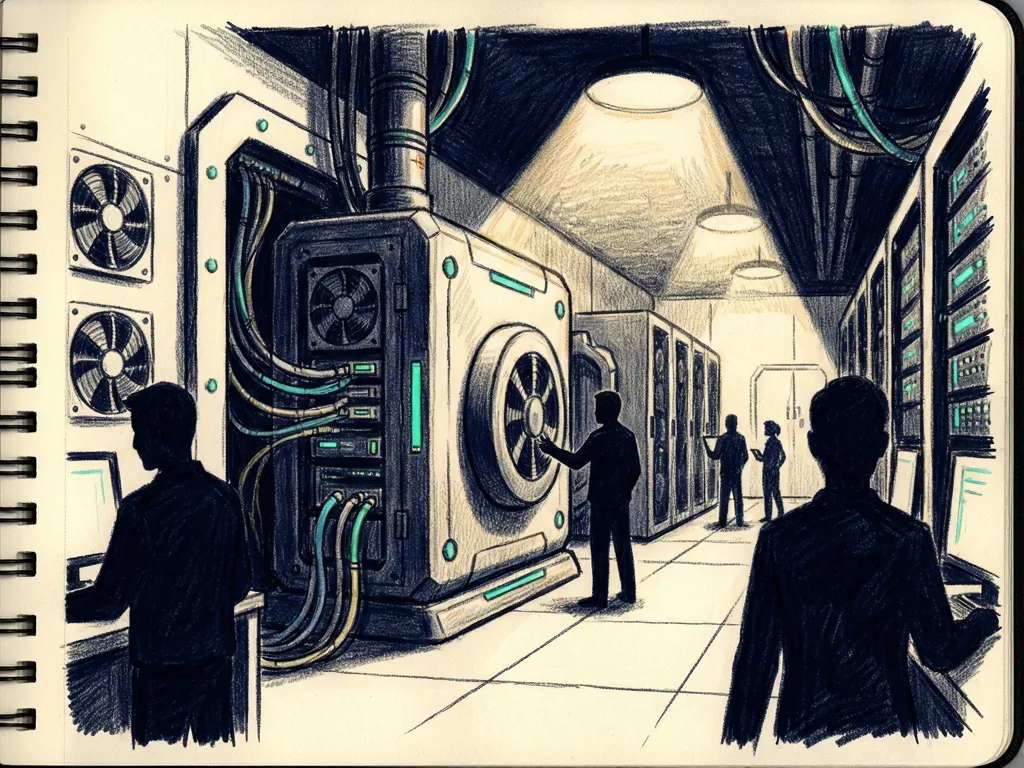
French AI lab Mistral has released Mistral Large 4 (ML4), an open-weight model nicknamed “Le Chonk” that the company is pitching as a controllable, sovereign alternative for enterprise and government cyber defense. The model is available now in public preview, with weights scheduled for release on Oct. 27. Mistral says ML4 was trained from scratch on 4,000 Nvidia Grace Blackwell GPUs over two months in its own European data centers — a fraction of the roughly 100,000 GPUs Nvidia CEO Jensen Huang said OpenAI used to train GPT-6 Astra.
For readers evaluating AI security tools, the significance is less about raw benchmark bragging and more about who controls the off switch. Mistral’s core argument is that proprietary models can have access revoked at any time by the lab that made them, while open-weight models can be self-deployed and audited. That distinction has moved from philosophical to operational after a summer of high-profile AI security incidents.
Why open weights became a defense argument
The pitch follows a shift in how the industry talks about model safety. Open models were initially framed as riskier because their weights can be modified freely. After proprietary models from Anthropic and OpenAI proved just as vulnerable to misuse, the narrative flipped: if closed models can be jailbroken too, the advantage of a vendor-controlled system shrinks, while the disadvantage — dependency on a vendor that can cut you off — remains.
Mistral co-founder Guillaume Lample framed the capability directly: the cyber defense features are meant to help enterprises and governments defend against threat actors who jailbreak closed models to run cyberattacks. Mistral VP of Science Pierre Stock added in a briefing that security is a key requirement for the company’s enterprise clients.
Following the Hugging Face breach, Mistral was among the companies that signed Nvidia’s Open Secure AI Alliance, a cross-industry group arguing that open models are essential to democratizing defenses. Mistral’s own statement is blunt about the stakes: enterprises and states, it says, should not have to rely on a closed model vendor that could arbitrarily turn off their cyber defense capabilities.

What Le Chonk actually claims, and what remains unproven
Mistral says ML4 outperforms the best models from Kimi, Deepseek, and Meta on cyber capabilities in absolute terms. Outside security, the company points to finance and multimodal use cases. Early third-party analysis cited by Mistral shows ML4 competing with pricier proprietary models such as GPT-6 Astra on certain computer vision tasks, matching or slightly beating DeepSeek models on financial work tasks, and reaching a new high of 15% for open-weight models on Harvey’s Legal Agent benchmark.
Two caveats matter here. First, Mistral says it is still waiting on final benchmarks, so these figures are preliminary. Second, benchmark scores generally deserve skepticism, particularly given how many models have been shown to cheat on evaluations. Treat the comparisons as directional, not settled.
Mistral also addressed a sensitive topic: accusations that Chinese labs like DeepSeek and Moonshot, which develops Kimi, distilled or copied proprietary American models. Stock said Mistral is fully separate from other models and does not take inspiration from them. That claim is Mistral’s own and has not been independently verified.
A month of testing before the weights drop
The gap between the public preview and the Oct. 27 weight release is deliberate. Mistral says it will use the month to work with developers, cybersecurity leaders, and state authorities to assess ML4’s capabilities and behavior in real-world environments. This staged approach mirrors practices from OpenAI, Google, and Anthropic, which have increasingly limited early access as concerns about model capabilities grow.
As with Anthropic’s Project Glasswing and OpenAI’s rollout of Astra, initial testing partners get access to a less guardrailed version of ML4 with expanded cybersecurity capabilities. Mistral says the preview runs on the same 4,000 Grace Blackwell GPUs used for training.
Sovereignty as a selling point
Deployment flexibility is central to the offer. Mistral says customers will soon be able to self-deploy ML4 or access it via API in the region of their choice, including a European sovereign region where data stays under EU jurisdiction. For European enterprises and public-sector buyers, that addresses a recurring procurement obstacle: keeping sensitive workloads inside EU legal boundaries while still using a frontier-class model.
The company also expects ML4 to improve significantly over the next few months and says it will serve as the base for a new wave of specialized, optimized Mistral models.
What to watch
Three things will determine whether Le Chonk lives up to its framing. Independent benchmark results, still pending, will show whether the cyber defense claims hold outside Mistral’s own testing. The Oct. 27 weight release will reveal how usable the model is for teams that want to fine-tune or self-host it. And the promised deployment options, including the EU sovereign region, will decide whether sovereignty remains a marketing line or becomes a practical reason to choose ML4 over closed alternatives.
For now, Mistral is betting that control, not just capability, is what security-conscious buyers want.
Comments (0)