
SolarRenderer performs generative reference rendering in only a few steps.
SolarRenderer converts engine geometry into styled real-time video from one reference frame, with few-step models, plus code, demos and benchmarks.

Key Points
- SolarRenderer converts untextured engine structure passes into styled real-time video guided by a single reference first frame, without per-game retraining.
- It preserves the engine’s geometry, motion, and timing frame by frame, claiming top structure performance on its benchmark with an Elo score of 1313.
- Its few-step distilled pipeline renders 17-frame chunks every 0.70 seconds at 24 fps, with about 1.1 seconds of latency and KV-cache support for continuous input.
- The project is designed for rapid style prototyping across engines and scenes, with paper, live demos, code, weights, and benchmark resources publicly available.
Meta description: SolarRenderer turns untextured engine structure passes into styled real-time video guided by a reference first frame, with benchmarks, code and live demos.

Tags: SolarRenderer, real-time rendering, structure pass, video generation, game engines
Featured image: abstract, friendly illustration of a wireframe game scene becoming a styled real-time video, with no real people, no logos and no text
SolarRenderer is a video rendering project that takes any engine's untextured structure pass — raw geometry, motion and timing without finished materials — and turns it into a finished, styled video guided by a reference first frame. For game developers, graphics experimenters and anyone prototyping visual style, it offers a way to move from a bare engine view to a playable-looking render without retraining for each game. The project says its model is built on MiniMax-H3, with a control low-rank adaptation (LoRA) and a few-step distilled LoRA.
Structure follows the engine frame by frame
The central promise is control rather than free-form generation. SolarRenderer is described as following the input's geometry, motion and timing frame by frame, so every object stays where the engine put it and the render keeps time with the game. The project reports that, on its held-out benchmark, it ranks first on structure with an Elo score of 1313 against nine other methods.

That emphasis matters for users who need the output to remain tied to the underlying scene. A stylish render is useful only if it still reflects the original layout, animation and pacing. The structure result is the project's clearest factual claim: the generated video is intended to behave like a styled layer over the engine's own motion, not a separate interpretation of it.
Style comes from one reference frame
The second major feature is generality. The project presents SolarRenderer as usable across any game, character or scene, naming Blender, three.js browser games, game engines and even a phone filming a screen as inputs. It renders in whatever look the first frame sets, with no per-game training.
That reduces a common friction in style transfer. Instead of building a separate model for every project, the user supplies a reference first frame and lets the system carry that look across the sequence. The source does not claim a fixed library of styles or a specific art pipeline; the style is whatever the initial frame establishes.
Speed is built around short chunks
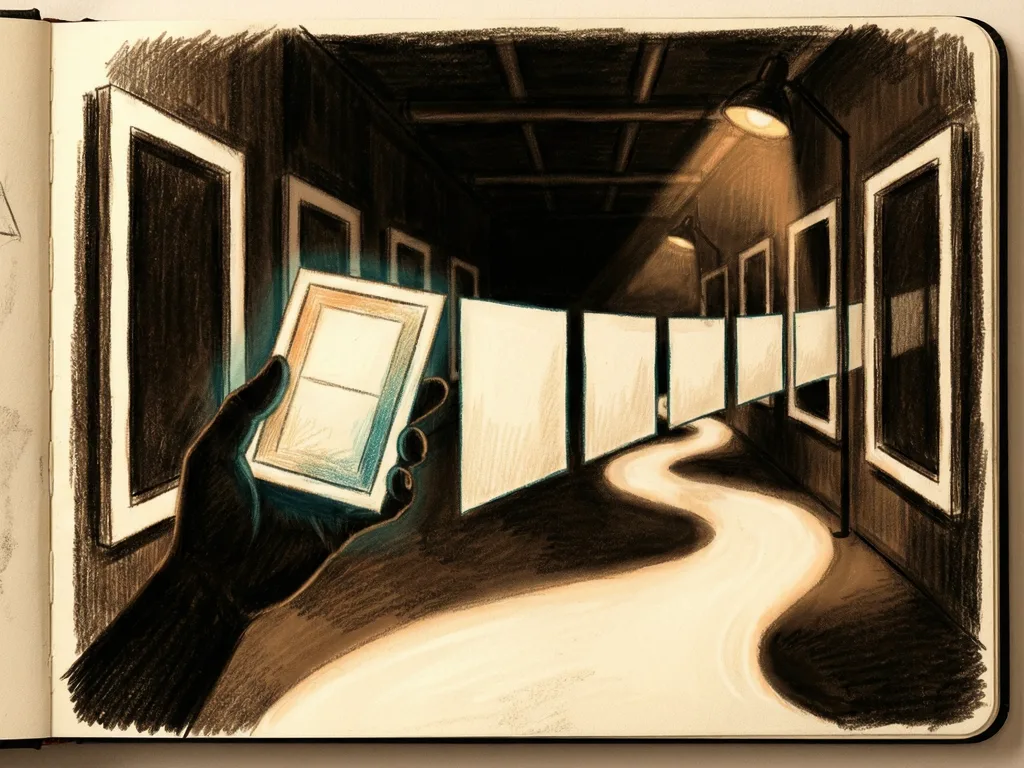
The real-time design is described around a block-causal student that renders 4 steps per chunk. It produces a 17-frame chunk every 0.70 seconds at 24 fps, putting the output about 1.1 seconds behind its input. With a KV cache, the system keeps going as long as the input does.
The project summarizes this capability with a simple idea: pick up the controller and play. The practical implication is that SolarRenderer is aimed at continuous, input-length video, not just a short offline clip. The reported 1.1-second lag also gives readers a concrete way to judge fit: for a casual prototype, it may be acceptable; for a fast reflex-heavy game, that delay would need testing in context.
What users can inspect next
The paper is available at https://arxiv.org/abs/2610.28630, the project page with live demos at https://enderfga.cn/SolarRenderer/, and the code at https://github.com/Enderfga/SolarRenderer. The weights, data and benchmark are collected at https://huggingface.co/collections/Enderfga/solarrenderer.
Those resources let readers compare the stated structure score, try the demos and review the implementation behind the 17-frame, 0.70-second chunk claim. The source reports structure performance, not a full comparison on every visual quality dimension, so the best next step for interested users is to inspect the live demos and benchmark materials directly.





Comments (0)