
ChronoReplay: A Single Response Interface Is Insufficient for Streaming Spatial Intelligence
ChronoReplay unifies categorical, metric, and trajectory spatial reasoning for streaming vision-language models improving generalization and inference
Key Takeaways
- ChronoReplay is a training framework that helps streaming vision-language models learn multiple spatial reasoning tasks together, including categorical relations, metric distances, and motion trajectories.
- It addresses “interface lock-in,” where models perform well only with one answer format, by preserving task-specific output formats while training across heterogeneous spatial supervision.
- The method organizes examples into chronologically ordered episodes and uses family-balanced training to improve temporal consistency and cross-task generalization.
- Reported results show gains on OVO-S-Bench, OST-Bench, and UCS-Bench, including a 13.41-point improvement on OST-Bench, though baseline scores and full evaluation details are not provided.
Meta description: ChronoReplay is a training framework for streaming vision-language models that unifies categorical, metric, and trajectory spatial reasoning.
Tags: ChronoReplay, streaming vision-language models, spatial reasoning, machine learning training
Featured image: An abstract, friendly illustration of ordered video frames flowing into a single spatial reasoning interface, with no real people, no logos, and no text.
ChronoReplay is a training method intended to strengthen spatial reasoning in streaming vision-language models. For readers following AI systems that process visual and language inputs over time, the key claim is that one model can learn several kinds of spatial questions at once: categorical relations, metric distances, and motion trajectories.
Why spatial models often specialize
Many existing spatial vision-language models do well only when answers are presented in a particular format. A model may be strong at categorical spatial relations, such as left, right, or inside, but weaker at metric distance questions, which ask for numeric estimates, or at trajectory tasks, which require predicting motion over time. ChronoReplay describes this problem as interface lock-in, meaning the model becomes tied to one supervision style and struggles when tasks use different answer formats.

How ChronoReplay changes training
Instead of treating different spatial tasks as isolated training sources, ChronoReplay organizes heterogeneous spatial supervision into chronologically ordered episodes. In plain terms, examples that share a time structure are grouped so the model can learn dependencies across frames or interactions rather than only isolated snapshots.
The framework keeps task-specific answer formats intact. This matters because a categorical answer, a numeric distance, and a trajectory description are not interchangeable outputs. By preserving those formats while mixing them in one training process, ChronoReplay lets a single model acquire complementary spatial capabilities without losing temporal consistency.
It also uses family-balanced training to balance different supervision families. This is intended to improve cross-task generalization: the model is not allowed to overfit to whichever spatial task is easiest or most represented.
Benchmark results and streaming efficiency
The reported results show consistent improvements across OVO-S-Bench, OST-Bench, and UCS-Bench. The source highlights a 13.41-point improvement on OST-Bench. Because the source does not provide baseline scores or the full scoring method for each benchmark, the practical size of that gain should be read alongside the specific evaluation setup.
ChronoReplay also addresses inference efficiency through adaptive frame selection. Rather than processing every visual frame equally, the approach selects relevant visual evidence at inference time. The framework states that this further improves performance while reducing visual processing costs. No cost reduction percentage is given, so the efficiency benefit remains qualitative.
What the framework suggests about streaming spatial intelligence
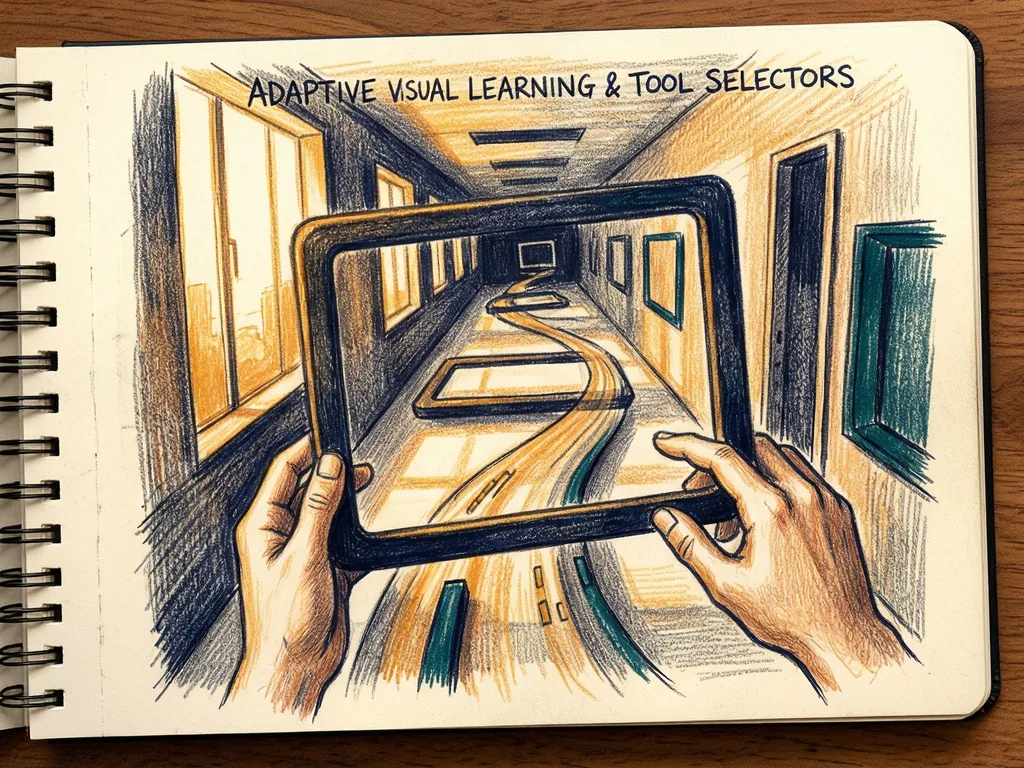
ChronoReplay points to three requirements for effective streaming spatial intelligence: preserving complementary spatial information across tasks, learning from temporally structured experiences, and choosing relevant visual evidence when making predictions. These ideas combine data organization, training balance, and inference selection into one story.
For people evaluating or building streaming vision-language systems, the practical value is that a single model may handle multiple spatial reasoning styles without being locked into one answer format. The framework's reported benchmark gains suggest this approach can improve generalization, but deployment details, training data scale, and absolute performance are not provided in the source.
Who should use it, and who should skip it
ChronoReplay is most relevant to developers and researchers working on spatial reasoning in streaming vision-language models, especially systems that must process ordered visual inputs and respond to varied spatial questions. It may also interest teams trying to unify categorical, metric, and trajectory tasks within one model.
It may be less useful for readers who need a ready-to-deploy model card, production latency numbers, or a comparison with every existing spatial model. The source describes a training framework and benchmark improvements, not a complete system specification. Without baseline scores, deployment guidance, or cost measurements, it should be treated as evidence of a training strategy rather than a finished product.


Comments (0)